"We need an AI strategy" is now a boardroom line in almost every manufacturing company. But a strategy without a roadmap is just an ambition. A roadmap is the phased plan that takes you from where you are today - scattered data and a few slideware pilots - to operations that run on AI. Without one, budgets get spent on disconnected experiments that never add up.
This post answers a scoped question: what does a practical, phased AI roadmap for a manufacturing company actually look like?
The two ways AI roadmaps fail
Before the phases, avoid the two classic traps:
- Too big. A multi-year, plant-wide "AI platform" that delivers no value for twelve months and quietly loses its sponsor.
- Too random. A scatter of disconnected pilots, each interesting, none building toward anything.
A good roadmap is the opposite of both: phased, value-first, and cumulative - each step earns the right to the next.
The five phases

Phase 1 - Assess and align. Map where you are: data maturity, the business goals AI should serve, and a named executive sponsor. Inventory candidate use cases and rank them by business impact (do not build yet). Output: a shared, prioritized plan. (See our posts on identifying AI use cases and prioritizing by business impact.)
Phase 2 - Build the foundation. Most strategies stall here because they skip it. The foundation is operational transparency plus AI-ready data: signals connected to context and outcomes you can label. You do not need a data lake - you need one trustworthy, contextualized, labeled dataset for your first use case. (See our posts on operational transparency and why factory data needs context.)
Phase 3 - First win. Pick the top-ranked, high-feasibility use case and ship it end to end - model, alert, action, owner. The goal is not the perfect model; it is a proven, measured result that builds belief and funds the next step. (See our post on building a business case.)
Phase 4 - Scale. This is where most programs die - pilot purgatory. Scaling is not a bigger model; it is a repeatable data pipeline, maintained labels, and a named owner, rolled out one line at a time. (See our post on why AI projects fail after the pilot.)
Phase 5 - Embed. AI becomes a standard tool, not a project: owned by the people on the floor, feeding the continuous-improvement cycle, and retrained as the process changes. Remember that ~70% of the challenge is people and process - so invest there. (See our posts on adoption and CI teams.)
Value in every phase, not one big bet
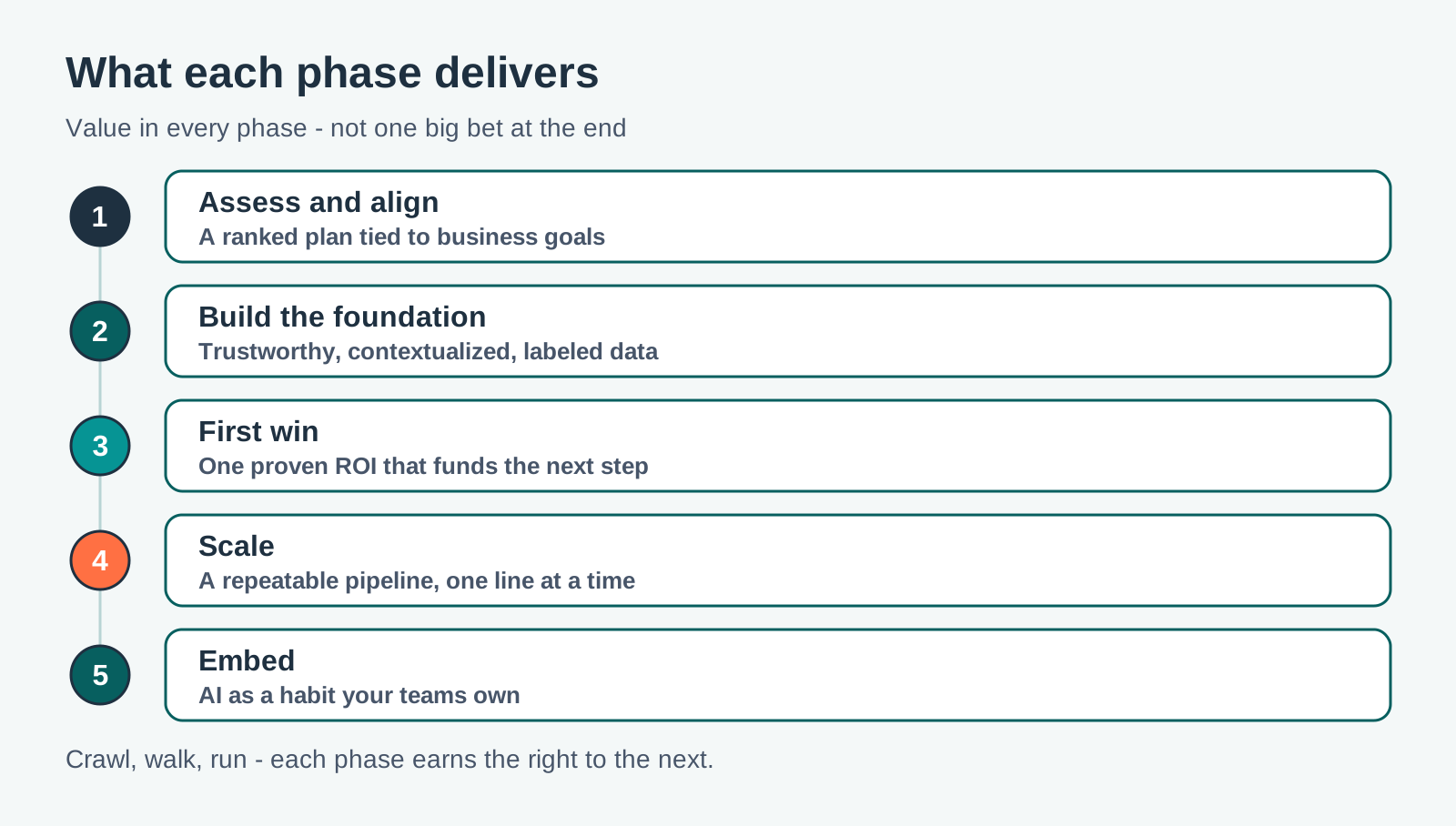
The discipline that makes a roadmap work is crawl-walk-run: every phase delivers something usable, so leadership sees returns before the next investment. A roadmap that promises all its value at the end is the one that gets cancelled halfway.
How long does each phase take?
There is no fixed calendar, but a useful shape: assess in weeks, foundation and first win in a quarter, scale over the following quarters, embed continuously. Run phases with some overlap - prepare data for phase 3 while you finish phase 2 - but never skip the foundation.
Use case in practice: a beverage manufacturer's 12-month roadmap
A mid-size beverage company wants "AI across the plant." Instead of a platform, they follow the roadmap:
- Assess (weeks 1-4): rank candidates; predictive maintenance on the main bottling line wins on impact and feasibility.
- Foundation (weeks 4-12): connect the line's PLC/SCADA signals, add context (SKU, format, shift), and label a year of filler and capper failures.
- First win (weeks 12-20): the model flags a developing capper fault days ahead; one avoided breakdown pays back the pilot.
- Scale (months 6-10): the same labeling workflow is rolled out to two more lines, each building its own history.
- Embed (ongoing): line engineers own the alerts, the CI team uses the data to chase micro-stops, and AI becomes routine.
Twelve months in, they have real value and a repeatable capability - not a stalled platform.
Practical rule
An AI roadmap is not a technology plan; it is a sequence of earned wins. Assess and prioritize, build a foundation on real data, prove one result, scale it deliberately, and embed it in your people. Start small enough that the first phase pays for the second.
Every phase runs on labeled, contextualized data. Begin your foundation with one dataset - import your signals, add context, and label the outcomes in Predsense labeling: https://www.predsense.ai/products/labeling