Continuous improvement teams are the best-equipped people in any plant to use AI well - and often the last to be offered it. They already think in data, root causes, and measured results. What they lack is not method; it is the ability to see patterns buried in thousands of hours of signals. That is exactly what AI adds.
This post answers a scoped question: how can a continuous improvement or OpEx team put AI to work inside the methods they already use?
AI does not replace CI - it sharpens it
DMAIC, Kaizen, PDCA, Six Sigma - these are frameworks for finding and fixing waste. AI is not a competing method; it is a better instrument for two of the hardest steps: Measure (seeing what is really happening) and Analyze (finding why).

Where AI helps, step by step
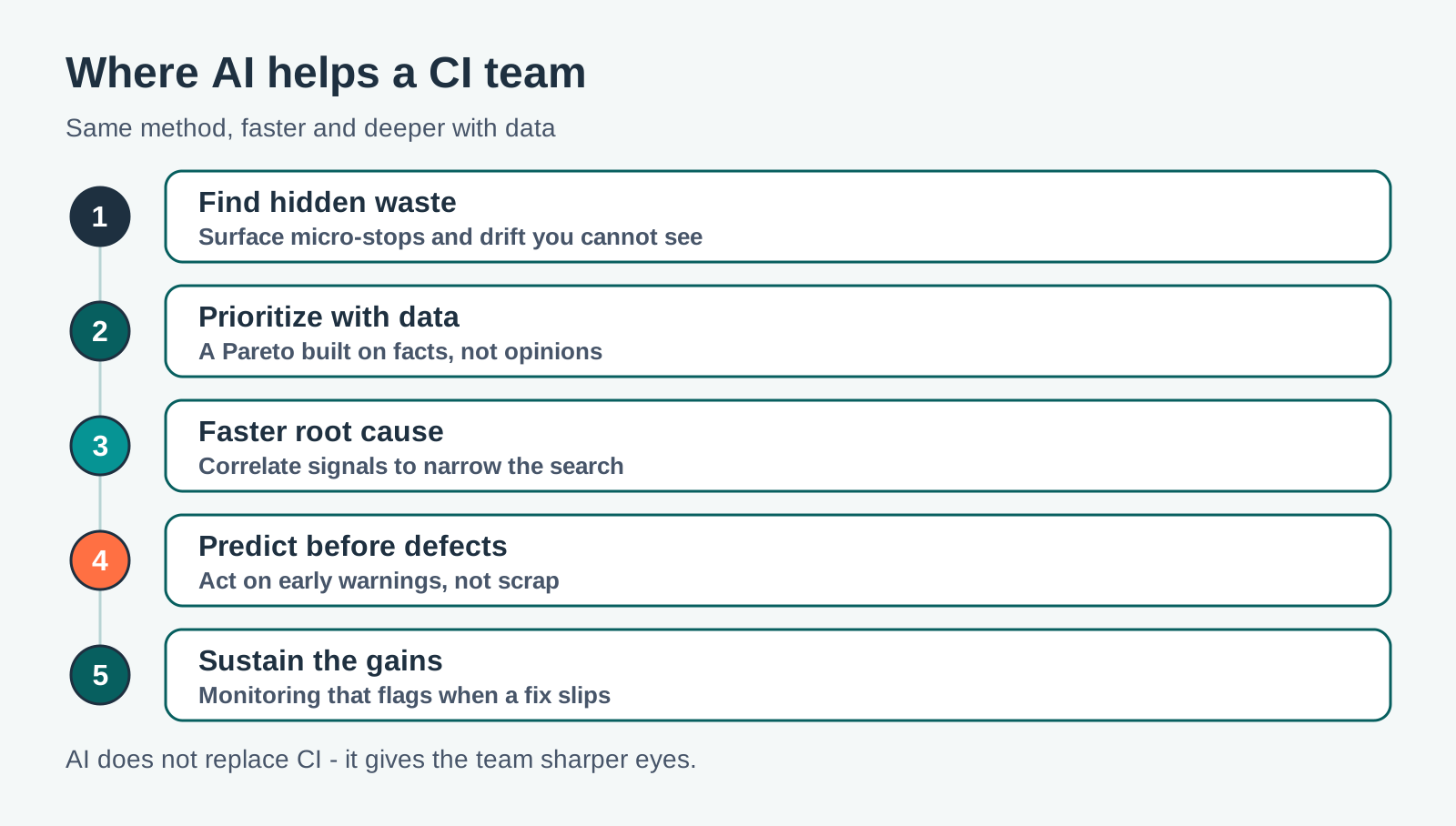
- Find hidden waste. Micro-stops, small speed losses, and slow drift add up to huge losses that never show on a manual tally. AI surfaces them.
- Prioritize with data. Build a Pareto from what actually happened, not from opinions in a workshop.
- Faster root cause. Correlate signals across machines to narrow a five-why from days to hours.
- Predict before defects. Shift from reacting to scrap to acting on early warnings.
- Sustain the gains. Monitoring flags the moment a fixed problem starts creeping back.
The best part: your CI engineers can do it themselves
Modern no-code tools mean the CI engineer who runs the Kaizen event can also label the events and train the model - no data scientist in the loop. The person who owns the improvement owns the AI. (See our post on no-code AI.)
Use case in practice: cutting micro-stops on a snack packaging line
A CI team at a snack producer chases a stubborn OEE gap on a flow-wrapper. The line "runs fine," yet availability lags.
- Measure: AI aggregates thousands of sub-minute stops the manual log never captured, revealing they cost more than the one big breakdown everyone worried about.
- Analyze: the model correlates the micro-stops with one product changeover and a specific film tension - the real root cause.
- Improve: the team adjusts the changeover standard and tension setpoint.
- Control: monitoring alerts them if micro-stops climb back - so the gain sticks.
Practical rule
Do not treat AI as a separate initiative competing with your CI program. Plug it into the cycle you already run: let it Measure what you cannot count and Analyze what you cannot see, and keep the human team in charge of Improve and Control.
Give your CI team eyes on the data they are missing. Start by labeling the losses on one line in Predsense labeling: https://www.predsense.ai/products/labeling