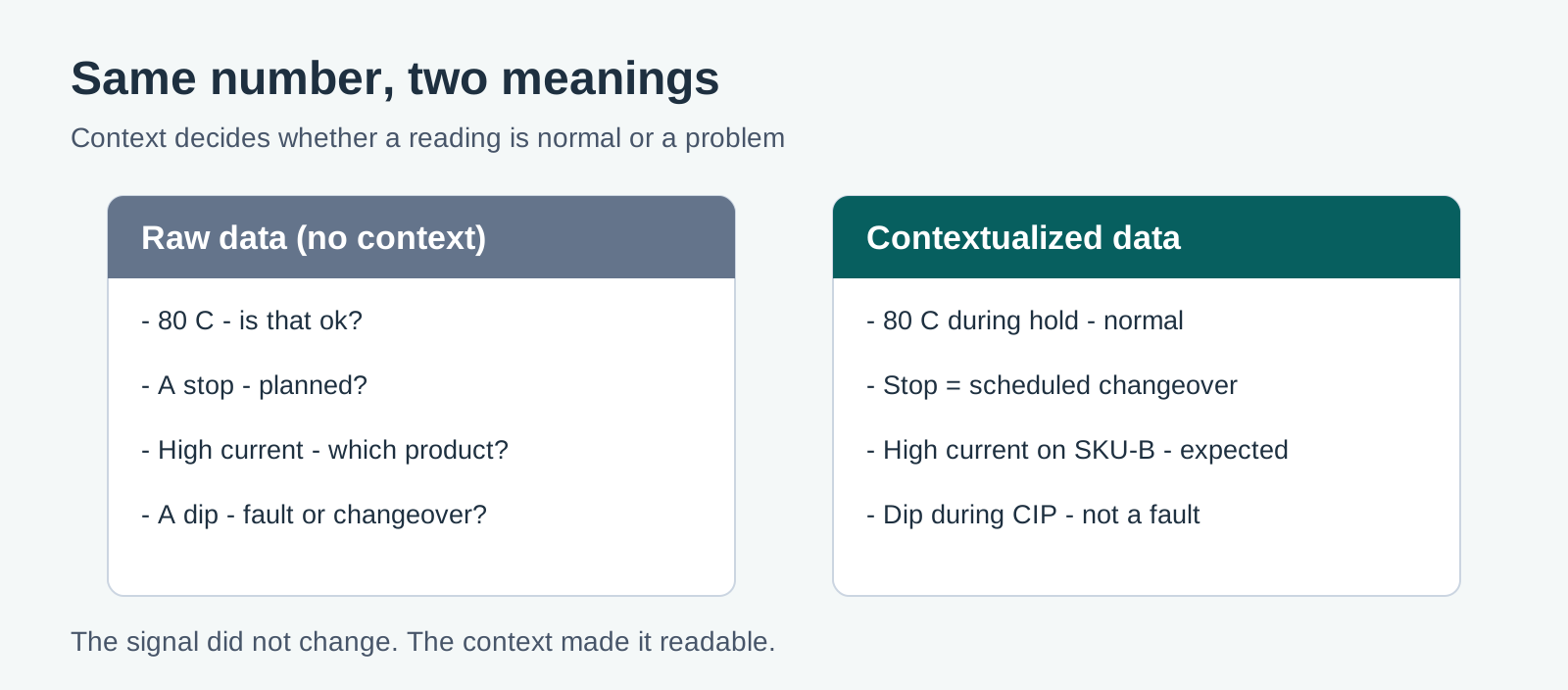
A temperature reading of 80 C means nothing on its own. On one line it is perfectly normal; on another it is a warning; during a cleaning cycle it is expected. The number is identical - only the context tells you which story is true. This is why raw factory data, no matter how much of it you collect, is not something AI can use as-is.
This post answers a scoped question: why does factory data need context before AI can use it, and what does "context" actually mean?
Raw signals are ambiguous by default
A sensor reports a value. It does not report what product was running, whether the machine was ramping up or holding, what the operator was doing, or whether a stop was planned. Strip that away and you are left with numbers that can mean opposite things. Feed those to a model and it learns noise.
What "context" means in practice
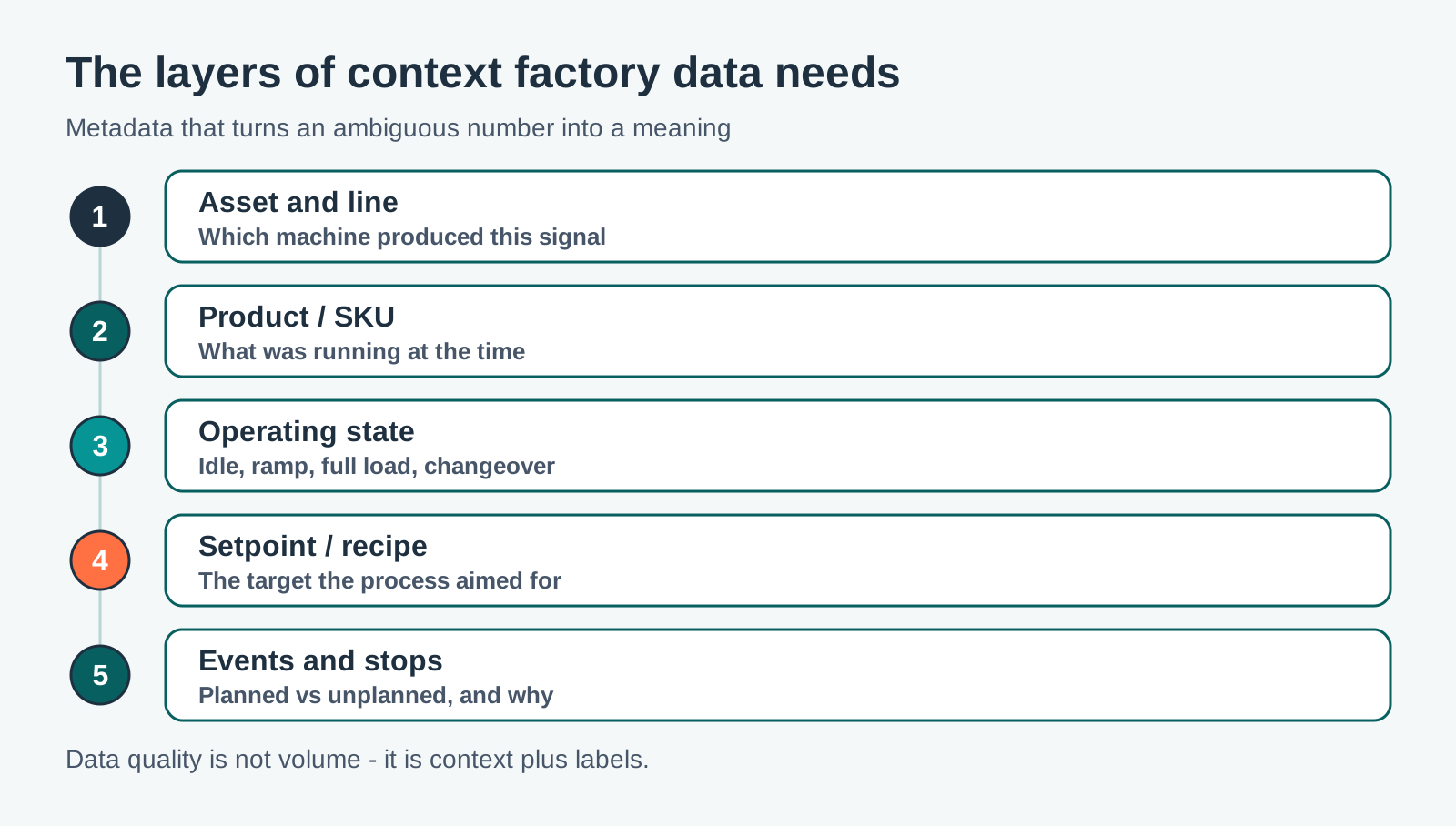
Context is the metadata that disambiguates a signal - the operating conditions under which the number was produced.
Without context, AI produces false alarms - or learns nothing
Give a model uncontextualized data and one of two things happens. Either it flags normal-but-different operating states as anomalies (false alarms that erode trust), or it averages everything together and learns a blurry "normal" that catches nothing. Both failures trace back to the same root: the data never said which situation it came from.
Data quality is context, not volume
Factories often assume more data equals better AI. But a year of unlabeled, uncontextualized signals is a year of ambiguity at scale. Real industrial data quality is the opposite of volume: it is knowing, for each stretch of signal, the product, state, setpoint, and events around it. That is what lets a model compare like with like.
Use case in practice: a pharma bioreactor
In a biologics plant, a bioreactor's temperature and pH swing widely by design across a batch: inoculation, growth, and harvest phases each have their own "normal." A raw 37.5 C reading is meaningless without knowing the phase.
- The problem: an alarm set on absolute temperature fires constantly during ramp phases and misses a real drift during the hold phase.
- The context added: batch phase, product/strain, target setpoint per phase, and stir/aeration state.
- The result: with context attached, the model learns a separate "normal" per phase and only flags deviations that matter - a slow drift during hold, not the expected swing during growth.
- Why it works: the raw signal never changed. Context made it interpretable.
Practical rule
Before you ask whether you have enough data for AI, ask whether your data has enough context. Signals plus context plus labels is what "AI-ready data" actually means - and it is usually a labeling problem, not a sensor problem. (See also our post on data labeling.)
Make one dataset AI-ready. Import your signals and attach the context - product, state, setpoint, events - that turns ambiguous numbers into meaning in Predsense labeling: https://www.predsense.ai/products/labeling