Most industrial AI does not fail because the model was wrong. It fails after the demo, when a promising pilot never turns into a production system. It is so common it has a name: pilot purgatory. And the numbers are sobering - in BCG's 2024 study "Where's the Value in AI?", surveying 1,000 executives across 59 countries, only 26% of companies had moved beyond proof-of-concept to generate real value. About 70% of the obstacles were people and process, not the algorithm.
This post answers a scoped question: why do so many manufacturing AI projects succeed as pilots and then fail to scale?
Why pilots look great
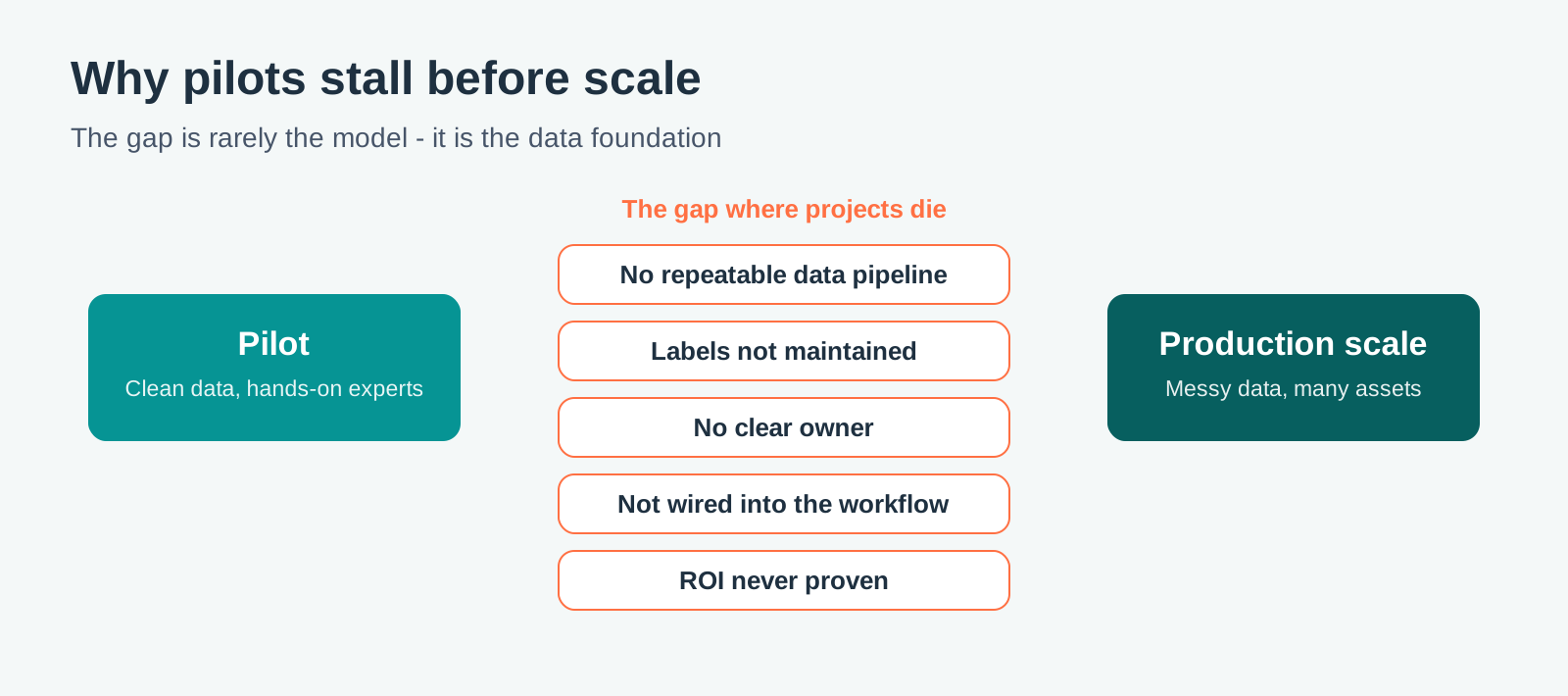
A pilot runs on the home-field advantage: a curated slice of clean data, one well-behaved line, and the full attention of experts who manually fix problems as they appear. Of course it works. The demo proves the model can work - it does not prove the organization can run it.
Where it breaks on the way to production
- No repeatable data pipeline. The pilot's data was prepared by hand once. Production needs new data flowing in, cleaned and contextualized, every day.
- Labels are not maintained. Someone labeled the pilot dataset once. In production, events keep happening and nobody keeps marking them, so the model goes stale.
- No clear owner. After the data scientists leave, no one on the plant owns the model.
- Not wired into the workflow. An alert that does not reach the person who can act on it changes nothing.
- ROI never proven. Without a measured result, there is no budget to scale.
The real problem is the data foundation
Notice that four of those five failures are about data, not the model. Pilots optimize the model; production demands a foundation - a repeatable flow of contextualized, labeled data with someone responsible for it. BCG's finding that ~70% of the difficulty is people and process is the same message from the other side: the algorithm was never the bottleneck.
Use case in practice: scaling across dairy filling lines
A dairy producer runs a predictive-maintenance pilot on one filling line. It works beautifully - the data scientist hand-labeled six months of stops and the model catches failures early. Then they try to roll it out to eleven more lines.
- What breaks: each line has different products, speeds, and stop patterns; the hand-labeled dataset does not transfer, and no one is labeling the new lines' events.
- Why it stalls: there is no pipeline to bring in and contextualize each line's data, and no owner to maintain labels after the pilot team moves on.
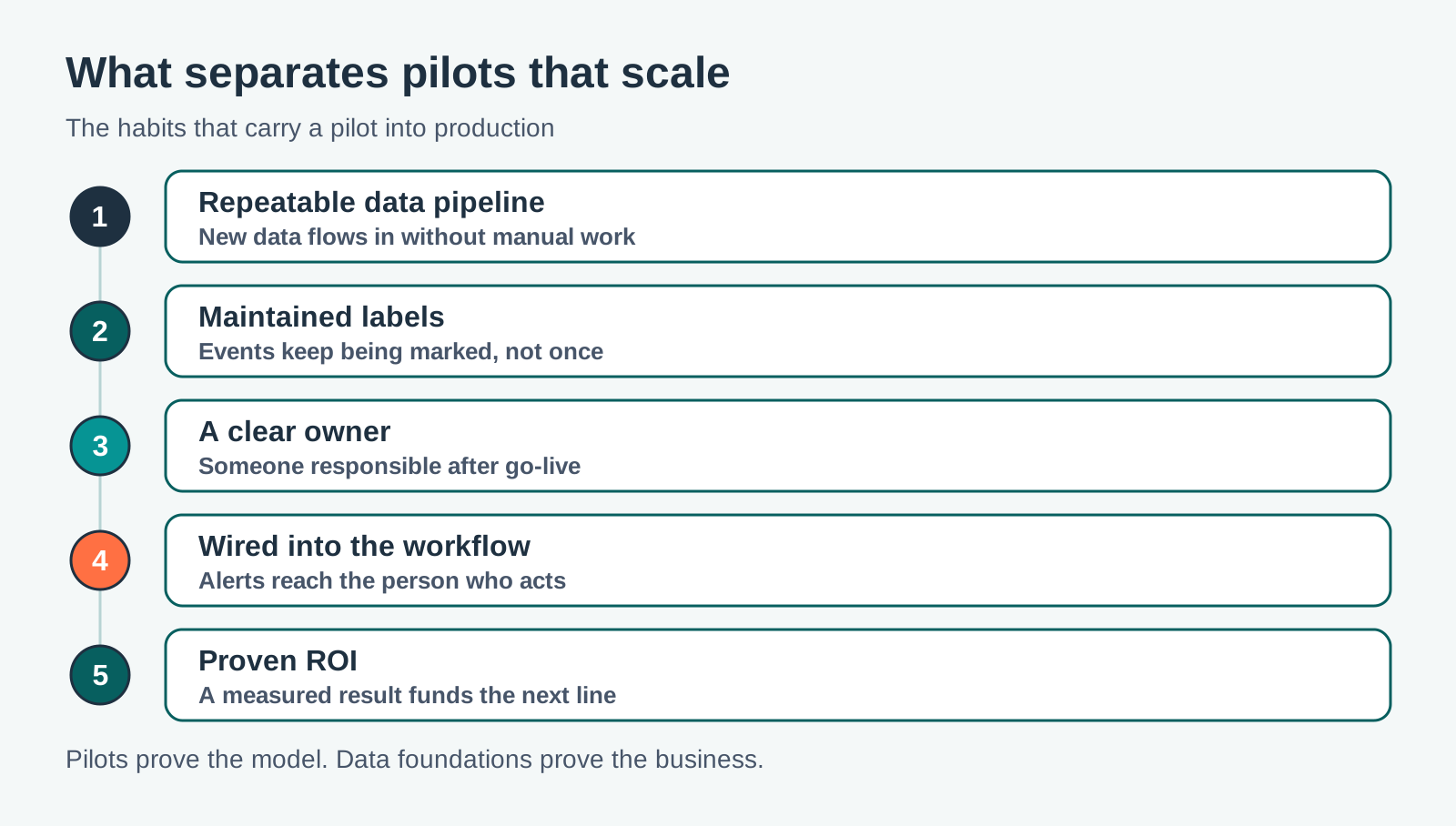
- What fixes it: a repeatable labeling workflow the line engineers themselves use, so each line builds its own contextualized history - and the model scales because the data foundation scales with it.
Practical rule
To cross from pilot to production, stop asking "does the model work?" and start asking "can we feed and maintain this without heroics?" Win one line with a repeatable, labeled data pipeline and a named owner, prove the ROI, and the second line is a rollout - not another pilot.
Escape pilot purgatory by building a data foundation you can repeat. Set up a labeling workflow your engineers own, one line at a time, in Predsense labeling: https://www.predsense.ai/products/labeling