Hire a talented data scientist, point them at the factory, and a surprising thing often happens: very little. Not because they lack skill - they can out-model anyone in the building - but because the factory floor breaks almost every assumption their training was built on. The hard part of industrial AI is rarely the algorithm. It is everything around it: no labels, implicit domain knowledge, messy signals, and operators who have to trust the result. Those are exactly the things a classic data-science background does not prepare you for.
This post answers a scoped question: why do strong data scientists struggle on the factory floor - and what actually makes industrial AI work?
Two different worlds
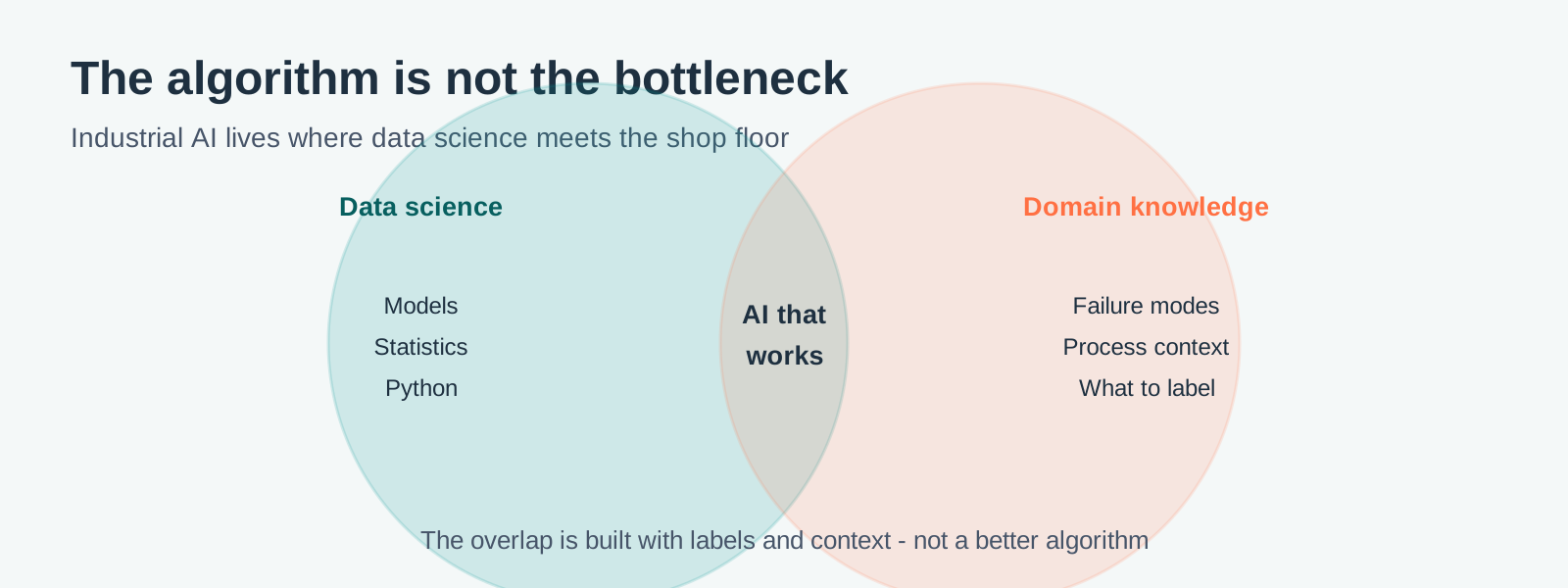
Data science brings models, statistics and code. The floor brings failure modes, process context and the knowledge of what "abnormal" even means. Industrial AI only works in the overlap - and that overlap is built with labels and context, not a better algorithm. A data scientist who stays in the left circle, however brilliant, cannot reach it alone.
Where the playbook breaks
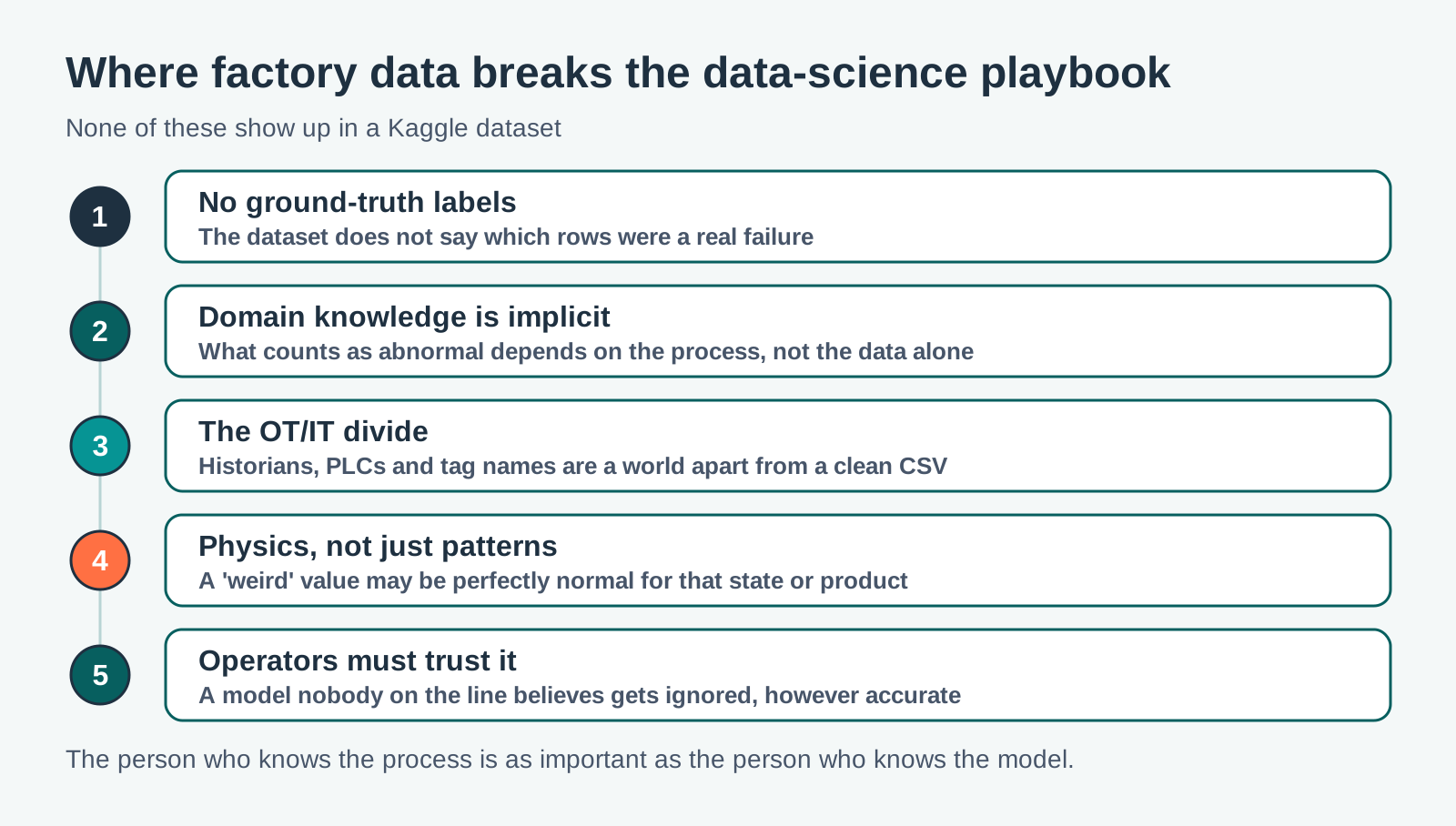
The usual data-science workflow assumes a labeled dataset, clean features and a clear metric. The floor offers none of those by default: there is no column telling you which rows were a real failure, "abnormal" depends on process knowledge the data alone does not carry, and the data lives in historians and PLCs that look nothing like a tidy CSV. On top of that, a value that looks weird may be perfectly normal for that state or product - and a model nobody on the line trusts gets ignored, however accurate.
Why this is a people problem, not a talent problem
None of this means data scientists are not valuable - they are essential. It means they cannot work alone. The missing half is the person who knows the process: which signals matter, what a normal changeover looks like, which past events were real failures. That knowledge is how raw data becomes labeled, trainable data. (This is also why we argue AI adoption is more about people than technology, and why engineers - not just coders - should be able to train models.)
Use case in practice: a snack extrusion and packaging line
A food manufacturer puts a data scientist on its extrusion-and-packaging line to predict choke-ups and seal defects. The historian export is a wall of cryptic tags with no units; the "failures" live in a maintenance logbook in a different system; and what looks like an anomaly in the data is often just a recipe change the data scientist did not know about. After weeks, the model mostly rediscovers that the line runs differently for different products - something any operator could have said on day one.
The project turns around only when a line engineer sits with the data scientist: together they map which tags mean what, mark the real choke-up and seal-defect events in the history, and explain which "weird" patterns are just product changeovers. Now the data scientist has labeled, context-rich data - and the model finally learns something real.
How you would set it up
- Signals: extruder motor load, barrel temperatures and pressure, screw speed, sealer temperature and film tension - from the PLC.
- Context (from the floor): product and recipe, run phase, and which tag is which, supplied by the people who run the line.
- What you label (together): past choke-ups and seal defects from the logbook, matched to the data by the engineer who was there. (See our posts on what data labeling is and why factory data needs context.)
- Who owns it: the data scientist builds the model; the line engineer owns the ground truth. Neither works without the other.
Practical rule
Do not hire your way out of an industrial-AI problem with data-science talent alone. Pair it with domain knowledge, and give both a shared tool to turn process expertise into labeled data. The bottleneck was never the math - it was the context only the floor can provide.
Domain knowledge becomes AI through labeling. Let your process experts mark what matters - import your signals, add context, and capture their know-how as labels in Predsense labeling: https://www.predsense.ai/products/labeling