Data labeling is the quiet foundation under every working industrial AI model - and the part most factories underestimate. A model does not learn from raw signals alone. It learns from examples that a human has marked and explained. In manufacturing, those examples are your engineers' hard-won knowledge, written down in a form a machine can reuse.
This post answers a scoped question: what is data labeling in manufacturing, and how do you use it to capture and store domain know-how?
What data labeling actually is
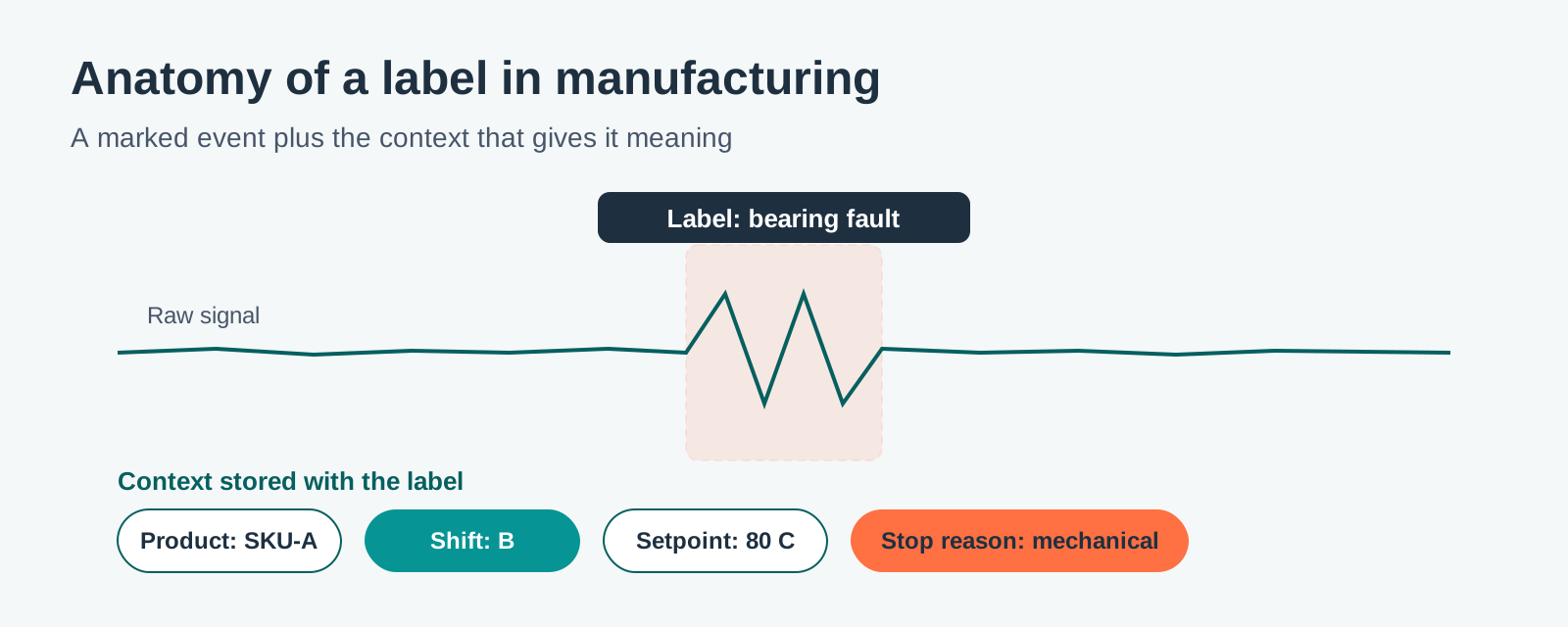
Labeling is the act of marking what happened in your data and why. On a time-series signal, it means selecting a window and attaching meaning: "this is a bearing fault", "this is a changeover", "this batch was scrapped". The raw numbers become a labeled dataset - examples the AI can learn the difference from.
Why manufacturing labeling is different
In consumer AI, labeling is "is this a cat?" - anyone can do it. In a factory, only a handful of people can look at a vibration trace or a temperature curve and say "that is the start of a problem". That judgment is domain know-how, and it usually lives in a few experienced heads. Labeling is how you get it out of those heads and into a durable asset.
What you actually label
- Events - failures, stops, alarms, micro-stops.
- States - running, idle, ramp-up, changeover, cleaning.
- Anomalies - readings that deviate from normal behavior.
- Outcomes - scrap, rework, quality pass/fail, root cause.
Context is what makes a label reusable
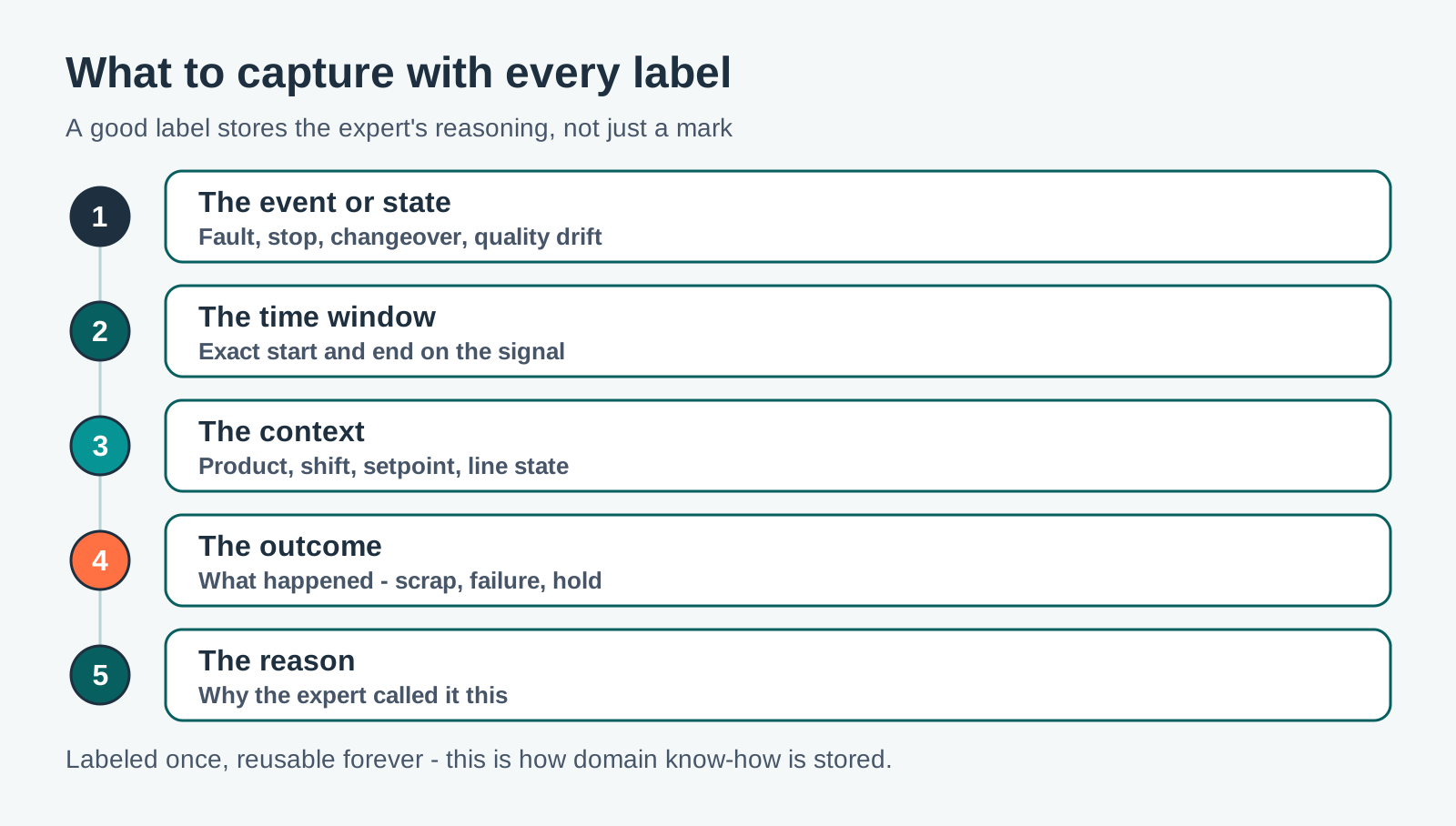
A label without context is almost worthless. "Fault at 14:03" tells the model nothing if it does not also know the product, the shift, the setpoint, and the machine state. Store the reasoning, not just the mark.
This is how you store domain know-how
When an expert labels an event and records why, that knowledge stops being tribal. It becomes a dataset that outlives the person, trains a model, and onboards the next engineer. Labeling turns "Ivan just knows when the capper is about to jam" into something the whole plant - and an AI - can use.
Use case in practice: a beverage bottling line
On a PET bottling line, the filler-capper throws dozens of short stops a day. Most are harmless micro-stops; a few are the early signature of a capper bearing going bad. Only the line's senior technician can tell them apart today.
- What you label: each stop event on the torque and current signals, marked as "micro-stop (normal)" or "capper fault (developing)."
- Context stored: SKU and bottle format, line speed, shift, and the setpoint at the time.
- The know-how captured: the technician's rule of thumb - "three torque spikes in a row on the 0.5 L format means the bearing is going" - becomes labeled examples.
- The payoff: a model trained on those labels flags the developing fault hours ahead, and the next technician does not need ten years of experience to catch it.
Practical rule
Data labeling is not data-entry busywork. It is the mechanism that converts your best engineers' judgment into a reusable, machine-readable asset. Label a few hundred well-chosen events with their context, and you have both a training set and an institutional memory.
Start by capturing one expert's knowledge. Import a signal, mark the events that matter, and add the context that explains them in Predsense labeling: https://www.predsense.ai/products/labeling