Ask who trains AI in a factory and the default answer is "a data scientist." But the person who knows why a pump sounds wrong, or why a batch drifts before it fails, is the engineer on the floor - not someone writing Python in another building. No-code AI exists to close that gap: it lets the people with the domain knowledge train the model directly.
This post answers a scoped question: how can a manufacturing engineer train an AI model without writing code?
Why the engineer should train the model
An AI model is only as good as the examples it learns from, and the best examples come from whoever understands the process. When a data scientist sits between the engineer and the model, domain knowledge gets lost in translation and every iteration takes weeks. Let the engineer label and configure directly, and the knowledge goes in first-hand.
What "no code" actually means
No-code does not mean "no work" or "magic." It means the engineer's job is to teach, not to program. Instead of writing algorithms, you:

- Import the machine's existing signals.
- Label the events you recognize - faults, stops, good vs bad runs.
- Configure what you want to predict and the context that matters.
- Train with a click; the tool handles the math.
- Review and deploy - check the model's calls against your judgment, then put it to work.
What the engineer provides vs what the tool automates
You provide the irreplaceable part: which events matter, what normal looks like, and the context. The tool automates the parts you should not have to care about - feature engineering, model selection, tuning, retraining. That division is exactly why no-code works: it asks the human for judgment and the machine for math.
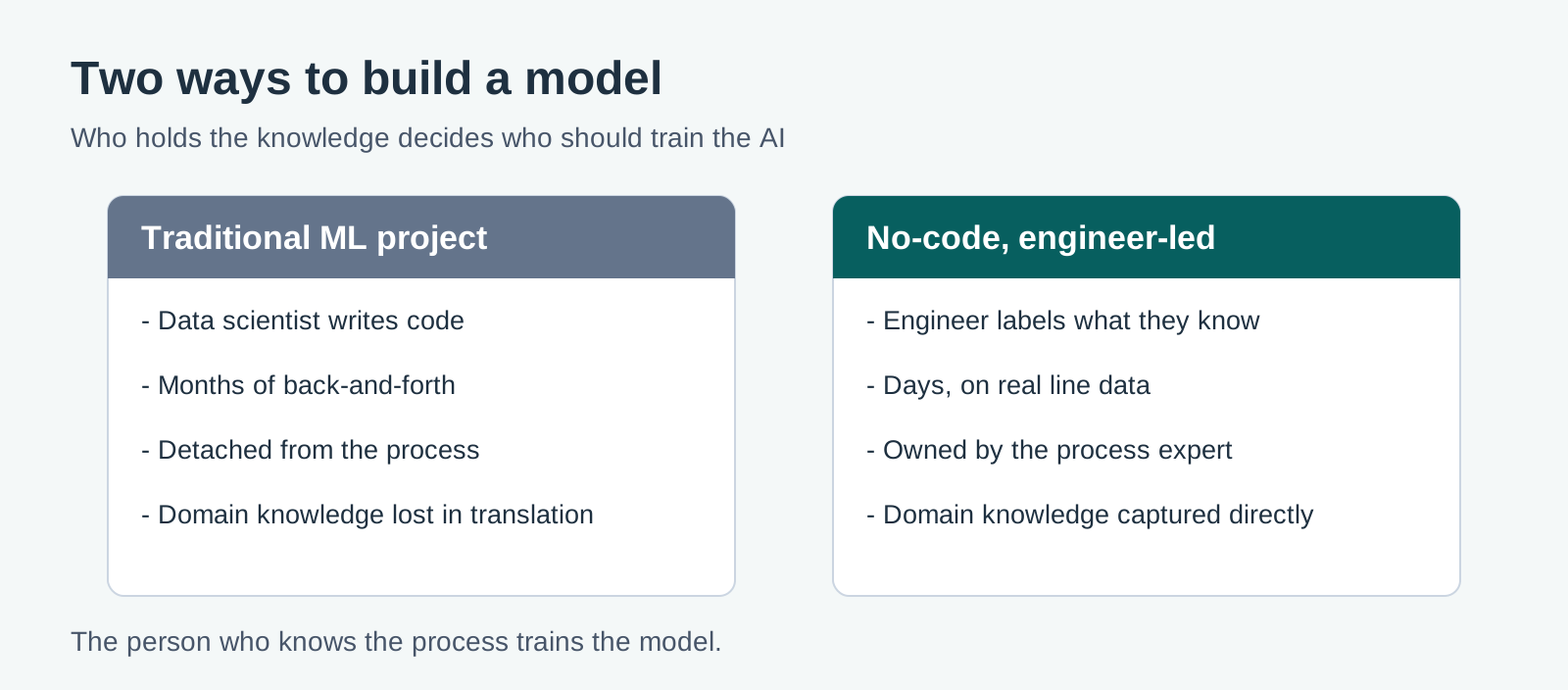
Use case in practice: a maintenance engineer on a packaging line
At a food plant, a packaging-line maintenance engineer suspects the case-sealer's drive is failing earlier than the PM schedule assumes - but cannot prove it. With a no-code tool:
- Import: the sealer's motor current and vibration from the existing PLC.
- Label: the last year of jams and drive replacements, marked with product and line speed.
- Configure: predict "drive fault within 48 hours," using the engineer's own definition of a warning sign.
- Result: in an afternoon - no data scientist, no code - the engineer has a working model that reflects exactly what they know about that machine, and they own it.
Where you still need experts
No-code covers most predictive-maintenance and anomaly-detection use cases. Highly novel problems, safety-critical certification, or plant-wide data platforms still benefit from specialists. The point is not to replace data scientists - it is to stop making them the bottleneck for the 80% of cases an engineer can handle.
Practical rule
If the knowledge lives with your engineers, the training should too. No-code AI turns "we need to hire a data scientist" into "our best technician labeled it this week." Start with one machine and one thing worth predicting.
Put the training in your engineers' hands. Import a signal, label what you know, and build a model without code in Predsense labeling: https://www.predsense.ai/products/labeling