Fixed thresholds are not wrong because engineers set them badly. They are wrong because the world they were built for no longer exists. A static alarm limit quietly assumes one thing: that your process has a single, stable "normal" you can draw a line under. Walk any modern plant and that assumption falls apart - different products, constant changeovers, variable load, aging machines. A line that fits one of those states is wrong for all the others.
This post answers a scoped question: why have static thresholds stopped working for modern manufacturing - and what replaces them?
This is the "why now" behind two related posts: why traditional alerts miss early warnings (the lead-time problem) and threshold alarms vs AI anomaly detection (the head-to-head). Here we focus on the root cause: a static limit cannot track a process that keeps moving.
What a static threshold quietly assumes
A fixed limit encodes one hidden belief - that normal is constant. It assumes the same number is meaningful at startup and at full load, for Product A and Product B, on a new machine and a worn one. That was roughly true when a line ran one product at a steady rate for years. It is rarely true today.
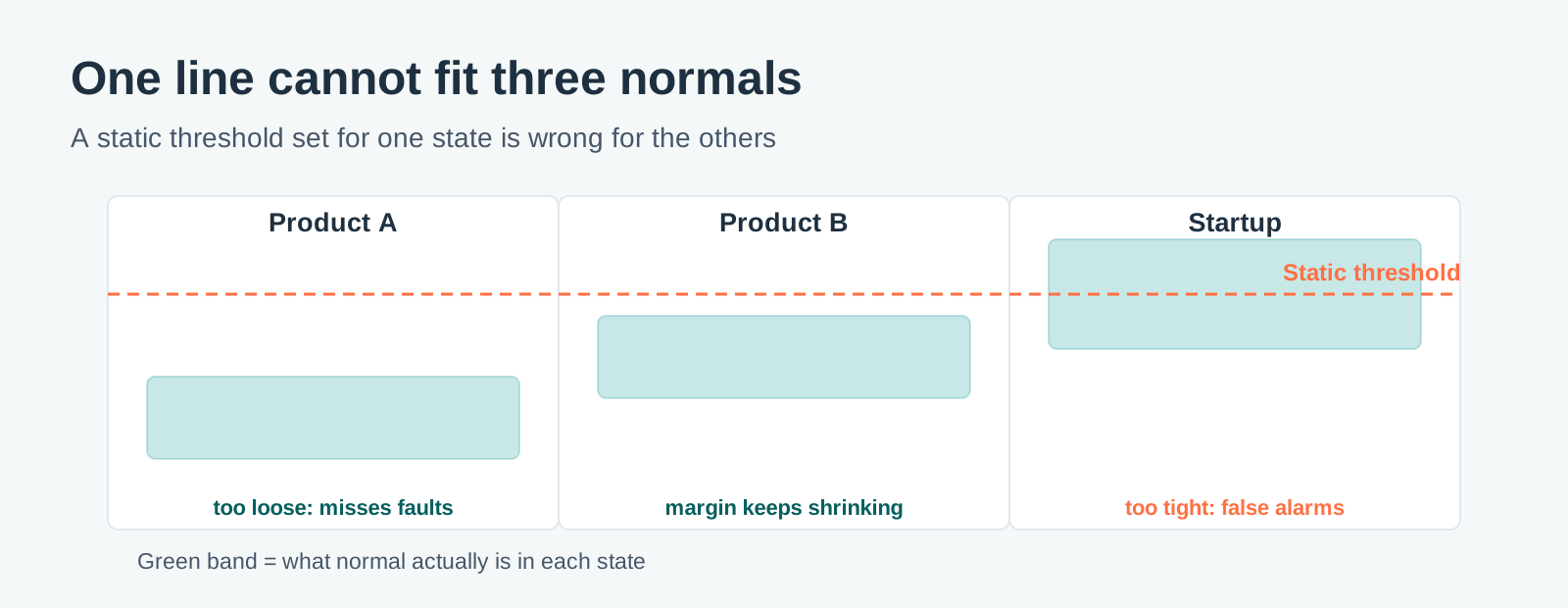
Look at what happens across three states of the same line. In one product, normal sits far below the fixed line, so the limit is loose and misses faults. In another, normal is higher and the margin shrinks. During startup, normal briefly exceeds the line, so it fires false alarms. One number cannot be right for all three.
Why the world changed
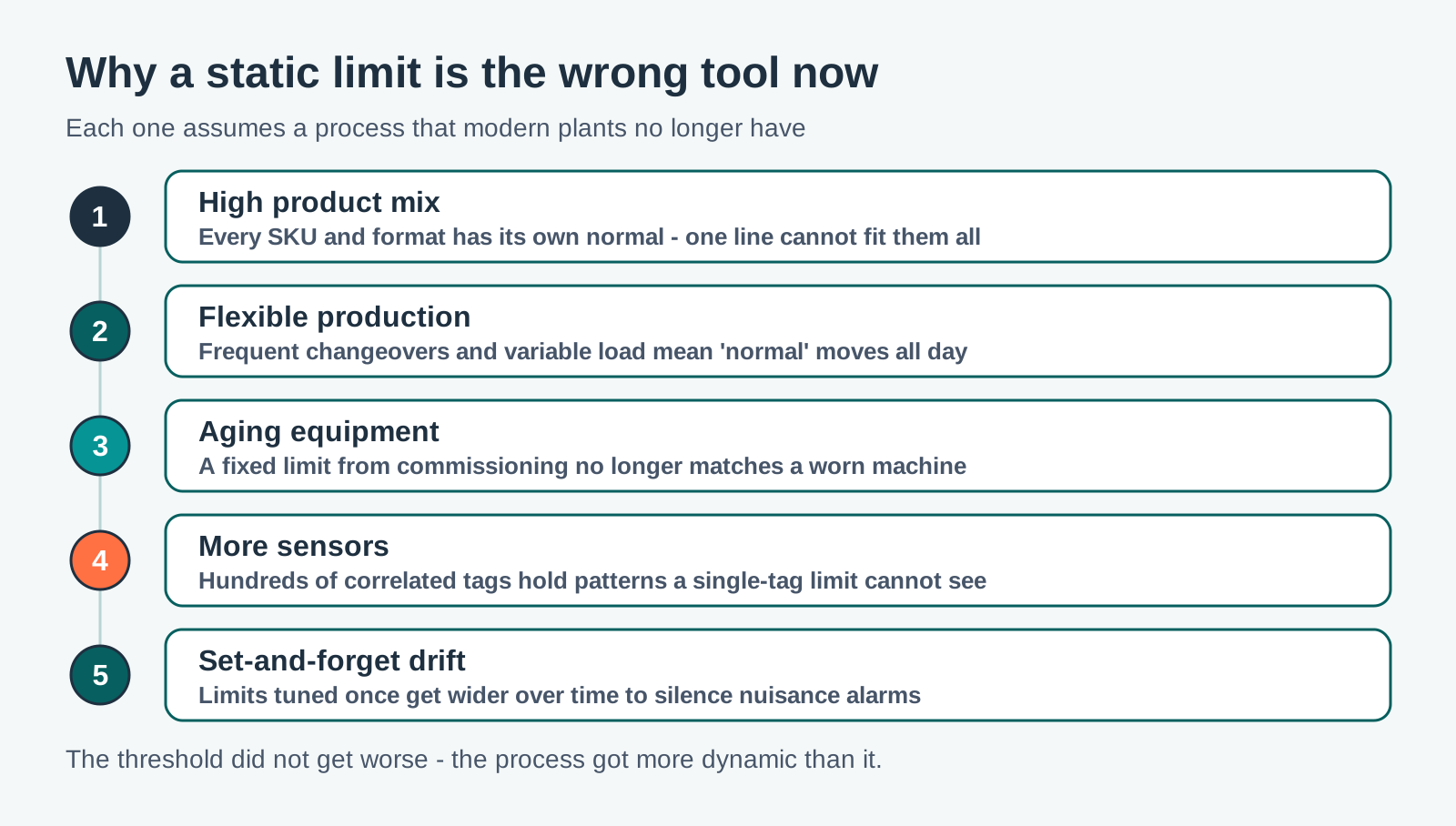
Five shifts broke the static threshold: higher product mix, flexible production with constant changeovers, aging equipment that no longer matches its commissioning limits, far more sensors holding patterns a single-tag limit cannot see, and set-and-forget drift that widens limits over time to silence nuisance alarms. The threshold did not get worse; the process got more dynamic than it.
What replaces it: context-aware limits
The fix is not "no thresholds." Keep hard safety trips - those must stay fixed. For everything else, replace the single static line with a normal that is learned per state: per product, per speed, per run phase, across many signals at once. Instead of one number, the model knows what normal looks like for *this* SKU at *this* speed right now, and flags deviation from that. (That is anomaly detection; see our primer and the threshold-vs-AI comparison.)
Use case in practice: a multi-SKU beverage filling line
A bottling line runs five SKUs across two bottle formats, with changeovers most shifts. Fill pressure, valve timing, torque and flow all have a different "normal" for a 0.5 L PET bottle than for a 1.5 L one, and different again during the startup ramp after a changeover. The plant set one torque alarm limit. To stop nuisance trips during changeovers and the small format, they widened it - which made it blind to a genuine capper wear problem on the large format, where normal torque sits higher and the fault hid under the loosened limit. The first sign anyone saw was a batch of poorly sealed bottles.
How you would build it
- Signals: fill pressure, valve open and close timing, capper torque, flow rate and line speed - from the PLC.
- Context: SKU, bottle format and run phase (changeover / startup / steady), so normal is defined for each combination instead of one global limit.
- What you label: past capper, filler and seal failures per format, so the model learns the per-state normal and the shape that precedes each fault. (See our post on what data labeling is.)
- Who reacts: the line lead gets a deviation alert that is already format-aware - "torque abnormal for 1.5 L steady run" - instead of a single limit that was wrong for four of the five SKUs.
A quick worked example
Say normal capper torque is 8 units for the small format and 12 for the large. A single static alarm at 15 catches neither small-format problems (which show up at 10-11, well under the limit) nor early large-format wear (which drifts 12 to 14 before anything trips). Two context-aware baselines - one per format - flag each the moment it leaves its own normal, days before a seal defect reaches a pallet.
Practical rule
Keep your safety thresholds; retire the idea that one static line can police a dynamic process. If your plant runs more than one product, changes over often, or has aging equipment, a fixed limit is wrong most of the time by design. Learn normal per state instead.
Context-aware normal is learned from labeled history. Give the model your products, states and past failures - import your data, add context, and label the events in Predsense labeling: https://www.predsense.ai/products/labeling