Every manufacturer is told to "adopt AI." Yet most pilots stall - not because the algorithms are weak, but because the factory was never AI-ready. AI readiness in manufacturing is not about buying a model. It is about whether your operation can feed a model good data, point it at a real question, and act on what it says.
This post answers a scoped question: what does AI-ready actually mean for a factory, and why do most fall short?
What "AI-ready" actually means
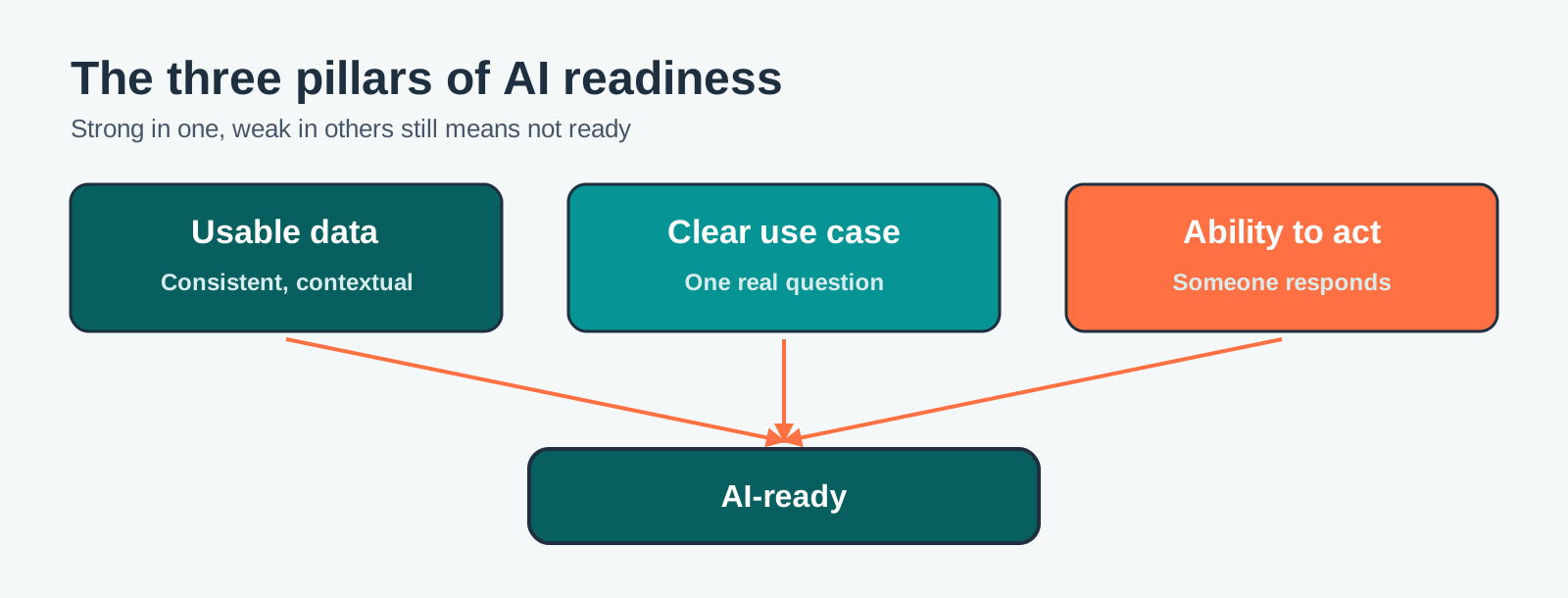
Strip away the buzzwords and readiness comes down to three pillars:
1) Usable data - signals that are consistent, sampled often enough, and connected to context and outcomes. 2) A clear use case - one specific question worth answering (predict this failure, catch this quality drift), not "do AI." 3) Ability to act - a person or workflow that can respond when the model raises a flag.
A factory strong in one pillar but weak in the others is not ready. Most are weakest on data and on acting.
Why most factories are not ready yet
1) Data is siloed and inconsistent. SCADA, MES, ERP, and maintenance logs live in separate systems with different tags, units, and time bases. Pulling one clean, aligned dataset for a single asset is often the hardest part of the whole project.
2) There is no context or labels. Raw signals without product, shift, or event context produce false alarms. Without labeled outcomes, models cannot learn what "bad" looks like.
3) No baseline of "normal." Teams cannot say what good operation looks like for a line, so they cannot judge whether a model's alerts are useful.
4) The use case is vague. "We want AI" is not a use case. Without a specific target and a definition of success, pilots drift and never prove value.
5) Nobody can act on alerts. If an early warning has no owner, no threshold for action, and no workflow, even a perfect model changes nothing.
6) Skills and trust gaps. Operators do not trust a black box; data teams do not know the process. Readiness requires both sides working on the same annotated data.
The real bottleneck: unstructured operational data
Notice that most of these reasons are not about algorithms. They are about data that is not yet structured, contextual, and labeled. This is why "we need better AI" is usually the wrong diagnosis. The gap is upstream: raw time-series that no one has turned into a usable, labeled dataset with agreed context.
A simple AI-readiness self-check
For one line or asset, can you answer yes to these?
- We can export consistent time-series for it (same tags, units, time base).
- We can attach context to events (product, shift, setpoint, stop reason).
- We can mark outcomes - failures, scrap, holds - as they happen.
- We agree on what "normal" looks like for it.
- We know who acts when an alert fires, and what they do.
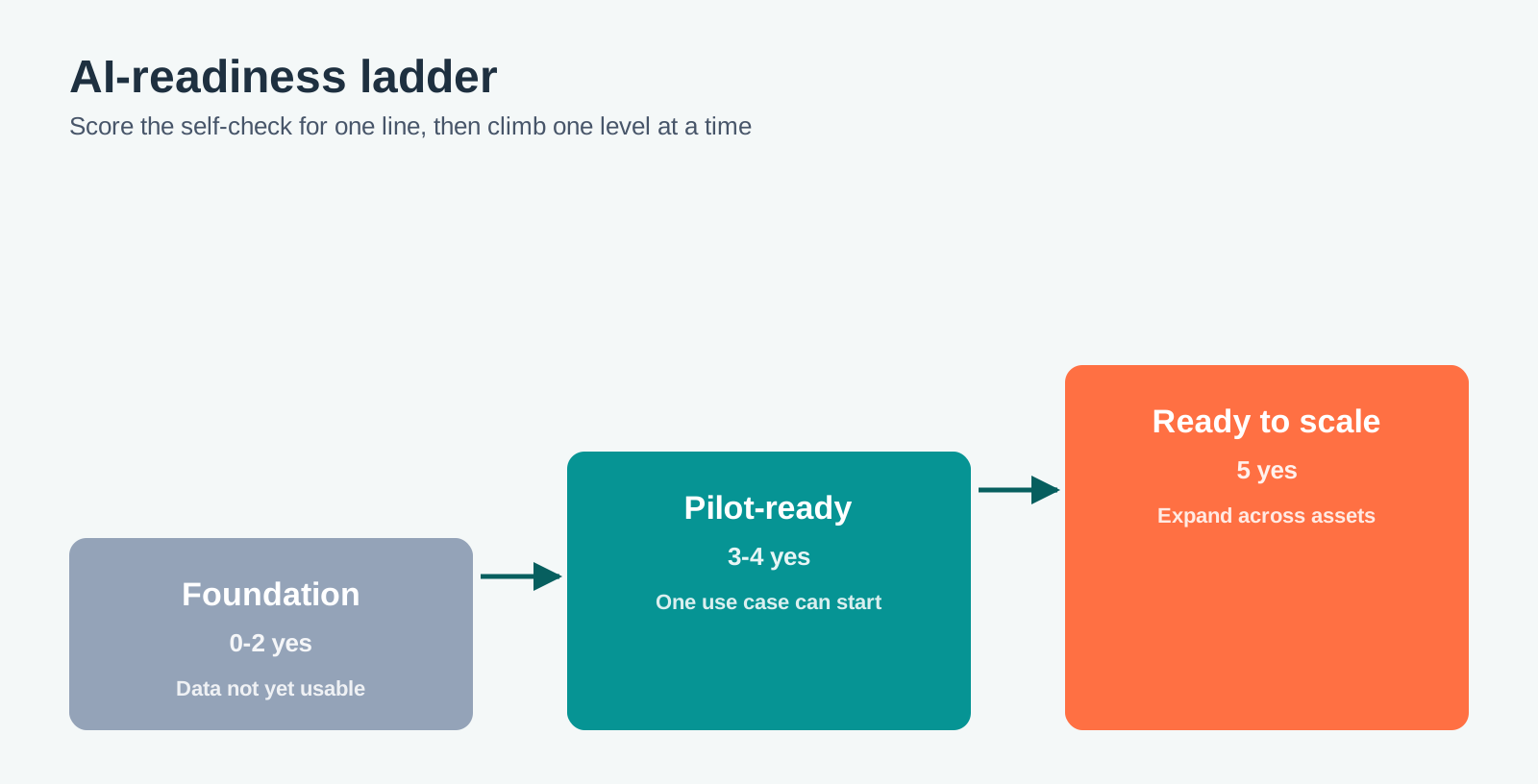
Zero to two "yes" answers: you are at the data foundation stage. Three to four: you are pilot-ready for one use case. Five: you are ready to scale.
How to become AI-ready without a big-bang project
Readiness is earned narrow, not bought wide:
- Pick one line and one question. Not the plant, not "AI" - one asset, one outcome.
- Unify and clean its signals. One consistent, aligned time-series is worth more than ten messy ones.
- Add context and labels. Annotate events and outcomes so the data becomes teachable.
- Agree on normal and on action. Define baseline and who responds to a flag.
- Prove value, then expand. Use the first result to fund the next asset.
Practical rule
You do not become AI-ready by buying a platform. You become AI-ready when one process has clean signals, real context, marked outcomes, and someone who acts. Start there, and "adopting AI" stops being a slogan and becomes a habit.
Start building readiness on one line: import your signals, add context to events, and label outcomes to create your first AI-ready dataset in Predsense labeling: https://www.predsense.ai/products/labeling