Every industrial-AI demo looks incredible. A clean dashboard, a model that catches the failure three days early, a confident narrator. Then you try it on your own plant and nothing works the way it did on stage. That gap - between the polished demo and the messy factory floor - is where most industrial-AI disappointment is born. It is not that the demo lied. It is that a demo is built to remove exactly the things that make the real problem hard.
This post answers a scoped question: why does an impressive industrial-AI demo so often fail to survive contact with a real factory - and what should you look for instead?
This is the demo-to-reality chasm. Its close cousin - what happens after a *successful* pilot - is covered in our post on why AI projects fail after the pilot phase. Here we are one step earlier: why the demo itself can mislead.
What a demo quietly removes
A demo optimizes for one thing: a clean, convincing story. To get there it uses a curated dataset, one hand-picked asset, labels prepared in advance, and stable connectivity. Every one of those is a thing your plant does not hand you for free.
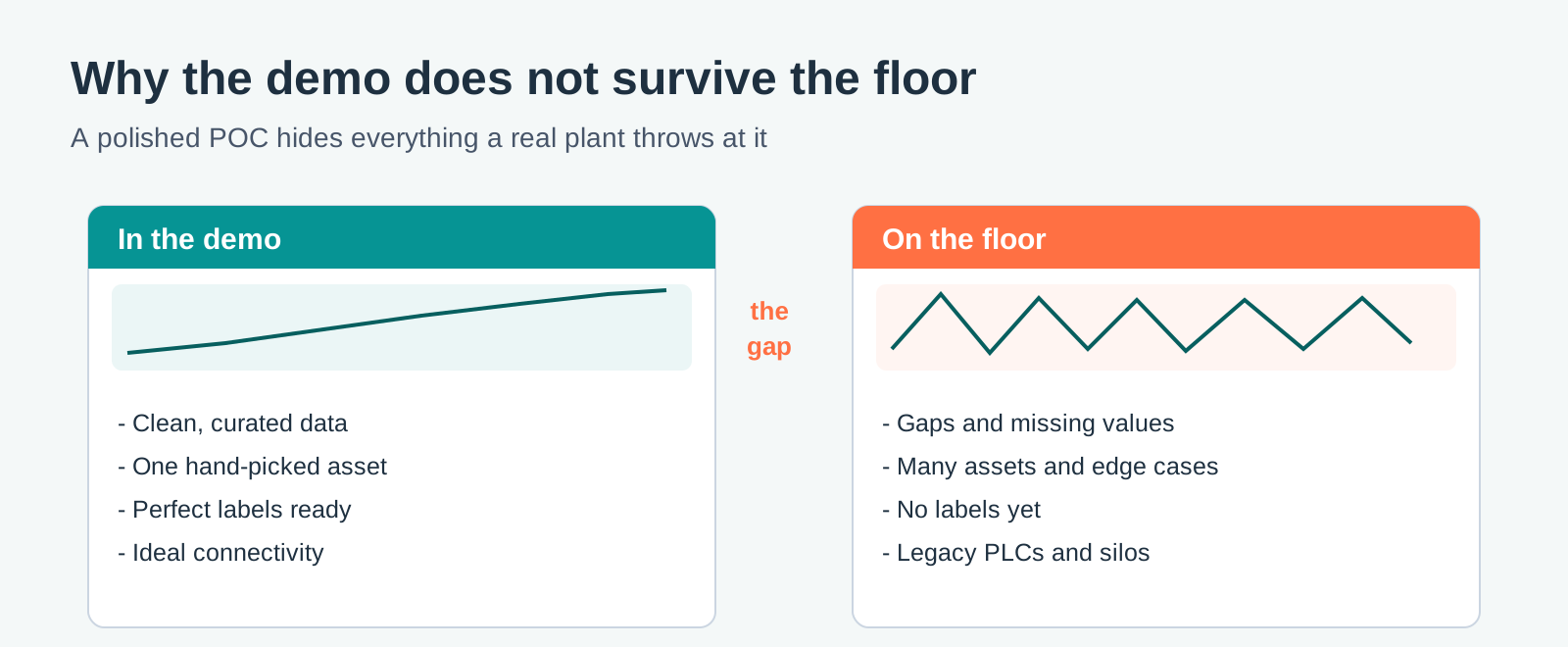
In the demo, the signal is smooth and the outcome is obvious. On the floor, the same chart is full of gaps, drift, bad tags and edge cases - and there is no label telling you which wobble was a real failure. The model did not get worse between the two; the problem got honest.
Demo conditions vs factory conditions
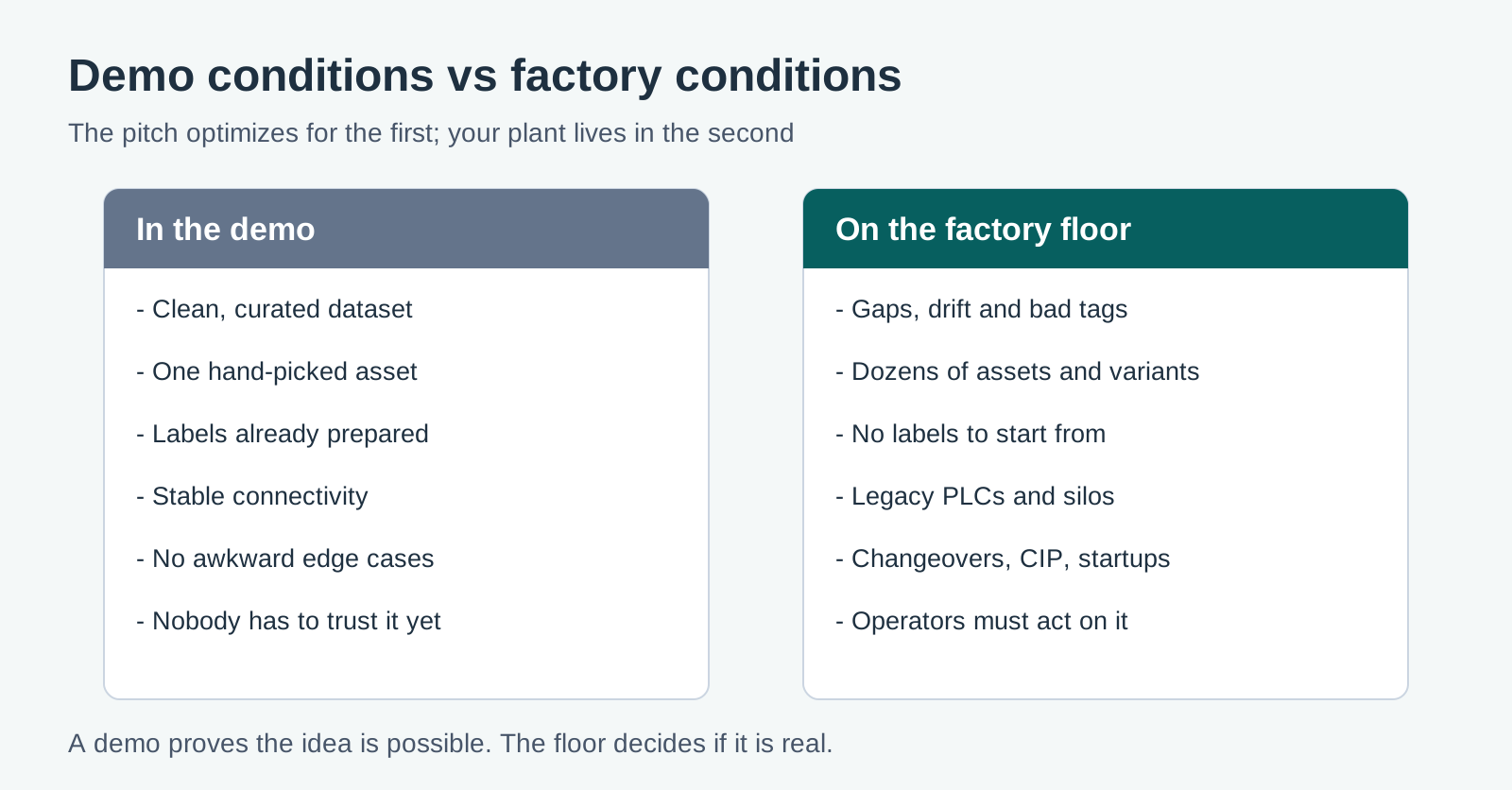
The comparison is stark, and the difference is almost never the algorithm - it is data quality, context, labels, integration and trust. The demo proves the idea is possible; the floor decides if it is real.
The questions that close the gap
When you watch a demo, ask what was removed to make it clean:
- Whose data was this - and how messy was it before cleanup? (See our post on why factory data is messier than you think.)
- Who created the labels, and do we have anything like them?
- Is this one ideal asset, or the awkward fleet we actually run?
- What happens during startup, changeover and CIP - the states demos quietly skip?
- Who on the floor has to trust and act on the output?
A vendor who answers these well is selling you a path through the gap. One who only shows the clean curve is selling you the gap itself.
Use case in practice: an anomaly-detection demo on a bioreactor
A pharma team sees a brilliant demo: anomaly detection on a single bioreactor, flagging a contamination-linked deviation two days early on a tidy historical batch. On their own site it stalls. The real bioreactors have different scales and impeller setups; a year of batches is riddled with gaps from sampling and manual interventions; the "deviations" were never labeled consistently across operators; and the GMP review team will not act on an alert it cannot explain. None of that was in the demo - and all of it is the actual project.
How you would build it (for real)
- Signals: dissolved oxygen, pH, temperature, agitation, feed rates and off-gas - per reactor, from the DCS or historian.
- Context: product, reactor scale, batch phase and media, so a value is judged against the right batch context, not a global one.
- What you label: past batches tagged by outcome and known deviations, agreed across operators and QA so "abnormal" means one thing. (This is the work the demo skipped - see our posts on what data labeling is and why factory data needs context.)
- Who reacts: the alert reaches process development and QA with the batch context attached, so it is reviewable under GMP instead of a black box.
A realistic expectation
A good demo should take an afternoon. The real project - connecting data, adding context, labeling batches, earning trust - takes weeks to months. That is not a failure of the technology; it is the actual shape of the work. The teams that succeed budget for the gap instead of being surprised by it.
Practical rule
Judge an industrial-AI solution by how it handles your mess, not by how clean its demo is. The demo shows the idea works in ideal conditions; your plant is where it has to work in real ones. Ask what was removed - and plan to put it back.
Closing the gap starts with your own data. Bring your real, messy signals, add context, and label the outcomes so a model can learn your plant - not a demo's: https://www.predsense.ai/products/labeling