Every experienced operator has done it: an alarm sounds, they acknowledge it without really reading it, and they go back to what they were doing. That is not carelessness - it is alert fatigue, and it is one of the most dangerous failure modes in a modern plant. When alarms are too many, too noisy and too undifferentiated, people stop trusting them - and the one alarm that actually mattered gets acknowledged-and-ignored with the rest.
This post answers a scoped question: what actually causes alert fatigue in manufacturing, and what can you do about it?
This is the human cost of noisy alarms. For the technical fix - cutting false alarms with ML - see our post on reducing false alarms; for why fixed limits also *miss* real events, see why traditional alerts miss early warnings.
How much is too much?
This is not a vague complaint - it is measured. Alarm-management standards such as EEMUA 191 and ISA-18.2 put the manageable steady-state rate at roughly one alarm every ten minutes - about six an hour - per operator. Above that, human performance degrades fast.
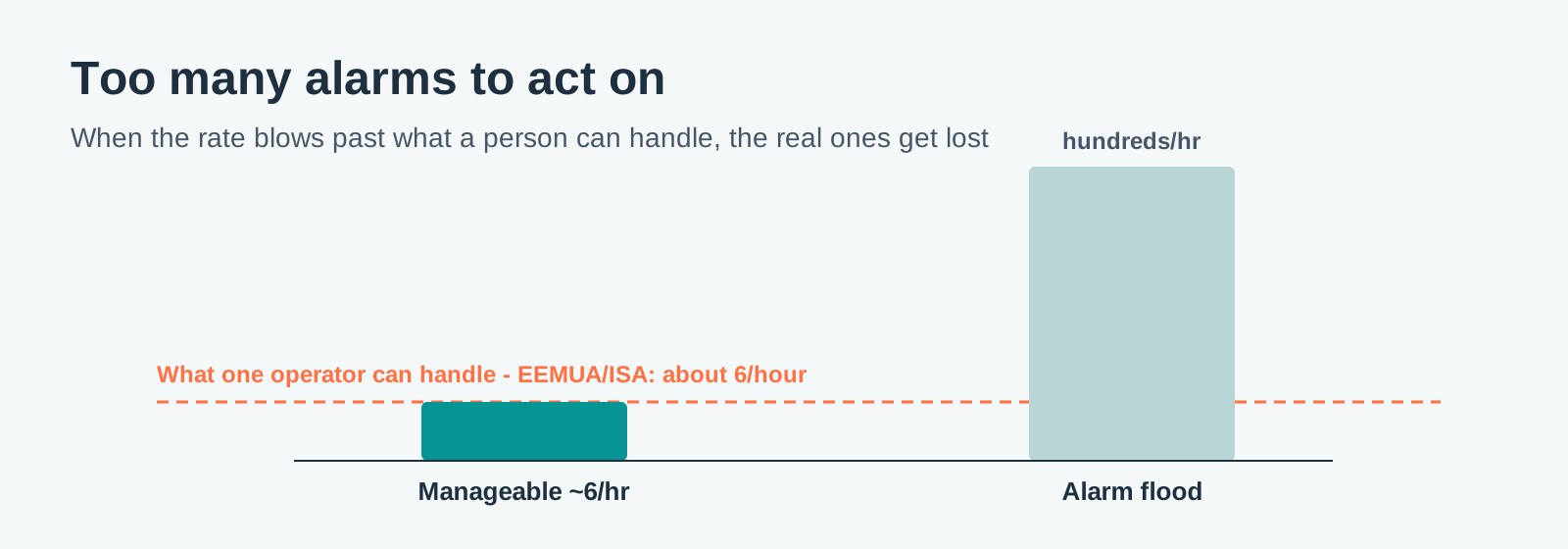
Real plants routinely generate that many alarms in a *minute*, especially during an upset, when a single trip cascades into dozens of alarms exactly when the operator can least afford to sort them. The manageable rate and the flood are not close - they are orders of magnitude apart.
What actually causes alert fatigue
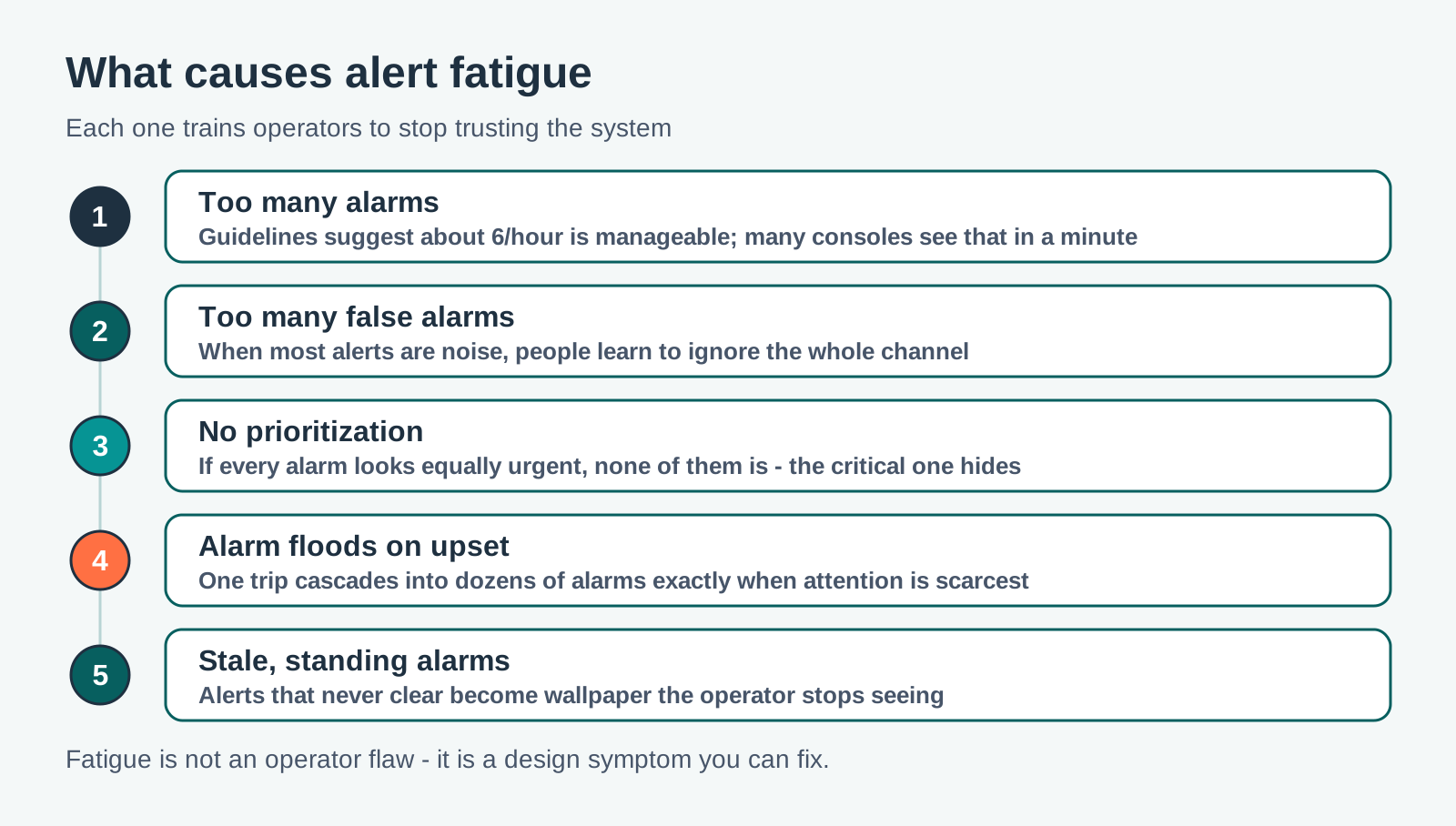
- Too many alarms - the raw rate is simply beyond what one person can process.
- Too many false alarms - when most alerts are noise, people learn to distrust the whole channel.
- No prioritization - if every alarm looks equally urgent, none of them is, and the critical one hides in the list.
- Alarm floods on upset - one event triggers a cascade of correlated alarms at the worst moment.
- Stale, standing alarms - alerts that never clear become wallpaper the operator stops seeing.
Each of these is a design symptom, not an operator flaw - which means each is fixable.
Two levers that fix it
First, alarm rationalization: the disciplined, standards-based cleanup of removing duplicates, retuning limits and assigning real priorities. Second, ML-based prioritization and suppression: a layer that learns context, suppresses expected state-based excursions, scores severity, and collapses a correlated flood into a single ranked event. The first fixes the configuration; the second keeps the rate manageable as conditions change. (See our post on reducing false alarms with ML.)
Use case in practice: a pharma packaging control room
A packaging hall runs several solid-dose lines - blistering, cartoning, serialization, palletizing - into one control room. Each line contributes alarms; during a jam on one cartoner, a cascade of correlated alarms (torque, vision, downstream buffer, serialization mismatch) floods the shared HMI. The operator, already watching four lines, silences the flood to think - and in doing so silences everything, including a genuine cold-seal drift starting on a different line. The batch on that line is later rejected. Nothing here is negligence; it is a system generating more alarms than a human can triage.
How you would build the fix
- Signals: the alarm stream itself plus the underlying process tags per line - torque, vision results, temperatures, buffer levels, serialization status.
- Context: line, state (run / changeover / jam / CIP), SKU and batch, so expected transitions can be recognized rather than alarmed.
- What you label: historical alarm floods and which single root event caused them, plus which rare alarms preceded a real reject, so the model learns to collapse cascades and elevate the ones that matter. (See our post on what data labeling is.)
- Who reacts: operators receive one ranked, deduplicated event instead of forty; a high-severity cold-seal drift now surfaces above a suppressed jam cascade, and QA is alerted before the batch is lost.
A quick worked example
During a two-minute cartoner jam, the raw system posts ~40 alarms - eight times the EEMUA/ISA hourly budget in 120 seconds. The operator silences the lot. A prioritization layer collapses those 40 into one "cartoner 2 jam" event and keeps the unrelated cold-seal drift on a different line visible at high severity. Same instruments, same plant - but now the operator sees two things to act on instead of forty things to ignore.
Practical rule
Alert fatigue is not fixed by telling operators to pay more attention; it is fixed by sending them fewer, better alarms. Rationalize the configuration, then let a model keep the rate manageable and the priorities honest - so that when an alarm does sound, people believe it.
Fewer, smarter alarms start with labeled history. Teach the system which floods to collapse and which rare signals to elevate - import your data, add context, and label the events in Predsense labeling: https://www.predsense.ai/products/labeling