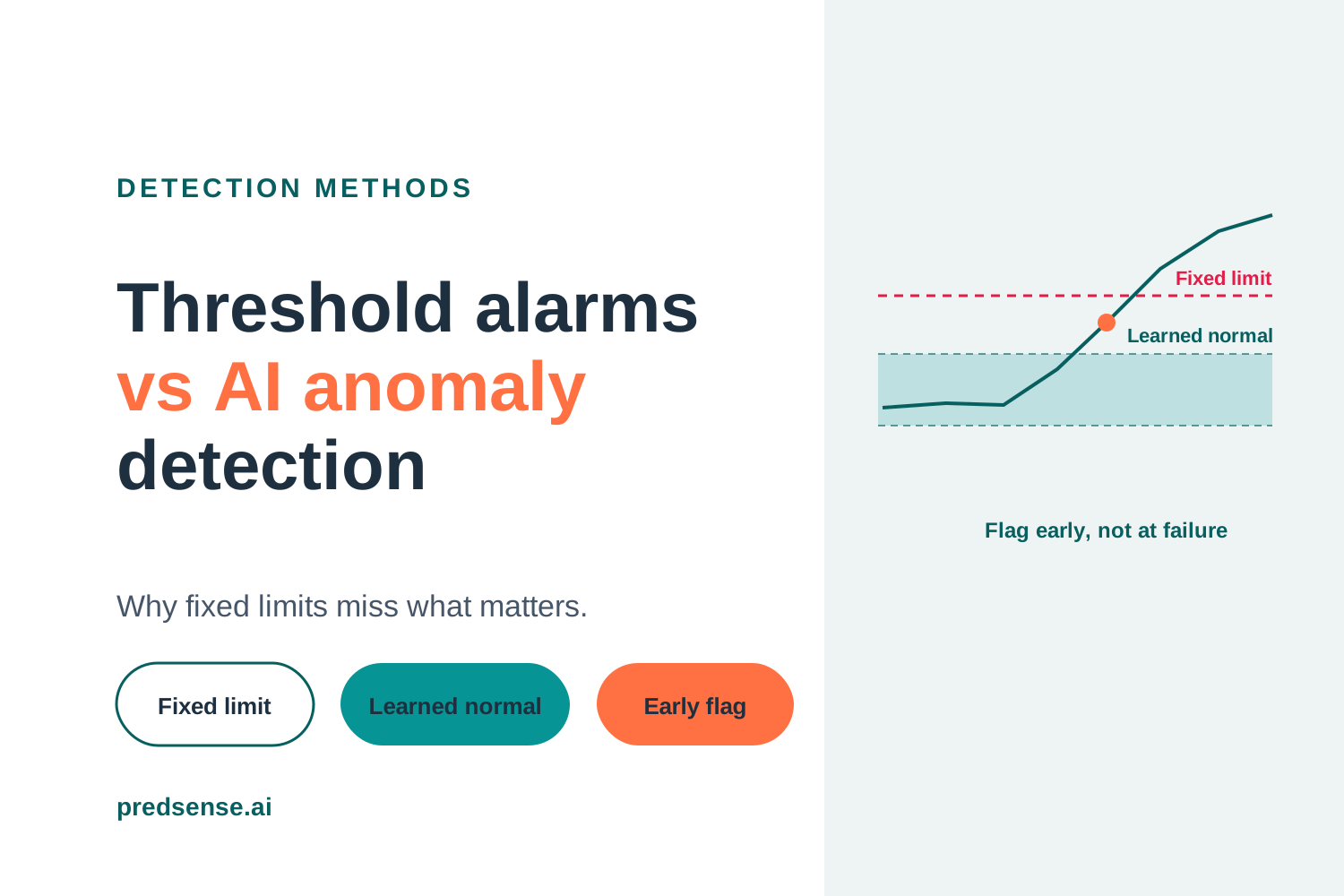
Every plant already runs on alarms: if temperature exceeds X, alert; if pressure drops below Y, trip. Threshold alarms are simple, transparent, and essential - and they also miss a great deal. They fire only after a signal crosses a fixed line, which is often too late, and they cannot see problems that live in the *relationship* between signals. AI anomaly detection takes a different approach: it learns what normal looks like and flags deviations early.
This post answers a scoped question: how do fixed-threshold alarms differ from AI anomaly detection, and when should you use each?
How threshold alarms work
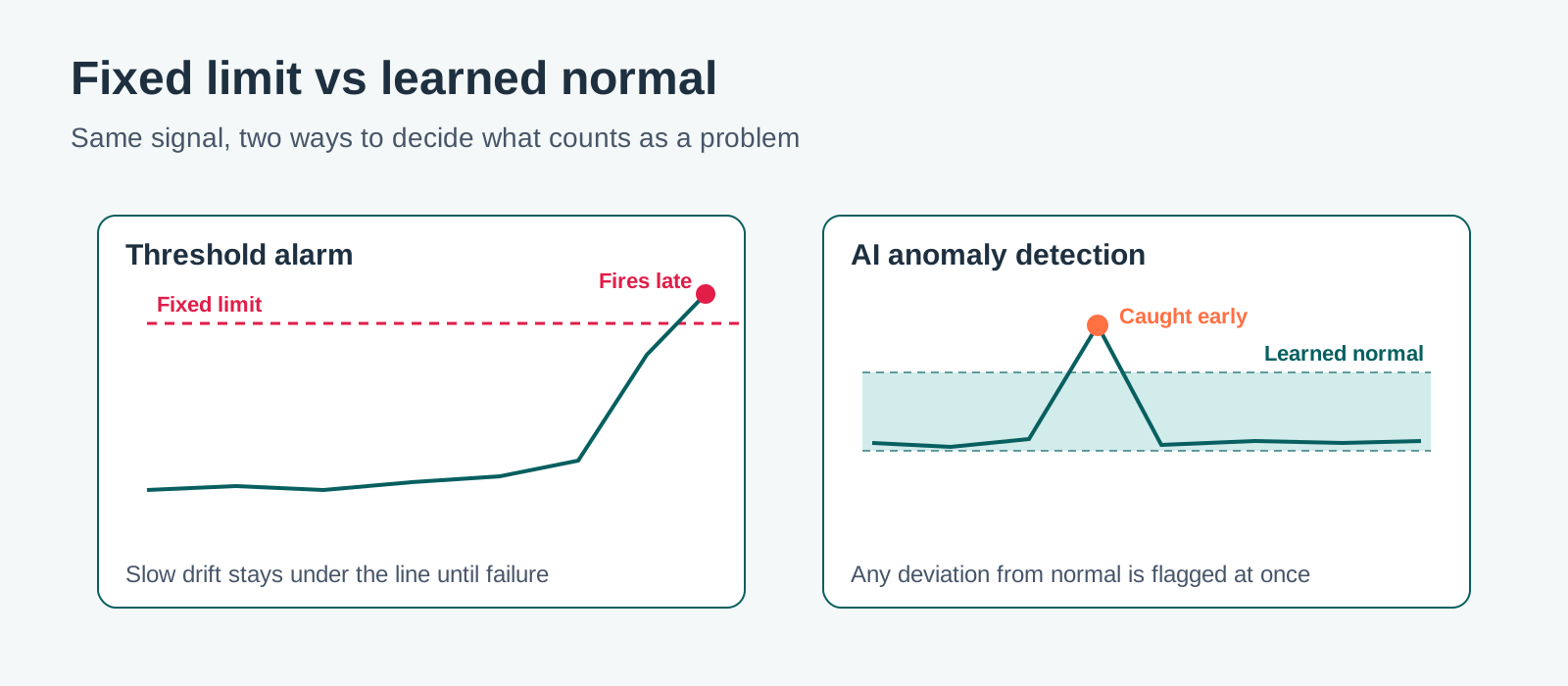
A threshold alarm compares one signal to a fixed limit and fires when it is crossed. Its strengths are real: it is easy to set up, completely transparent, and perfect for hard physical and safety limits (a pressure trip should be a fixed limit). But it has structural blind spots:
- It is static. "Normal" changes with product, load, and season; a fixed line does not.
- It is single-variable. It cannot see a problem that only appears in the combination of several signals.
- It is late. A signal often crosses the limit only when failure is already underway.
- It is noisy. Set it tight and you get false alarms; set it loose and you miss real events.
How AI anomaly detection works
Instead of one fixed line, anomaly detection learns a model of normal behavior from history - often across many signals at once - and then scores how far current behavior is from that normal. When the deviation is large enough, it flags. Because it learns the *shape* of normal, it can catch slow drift long before any single signal crosses a hard limit, and it can spot multi-signal patterns a human would never watch for.
Side by side: when to use which
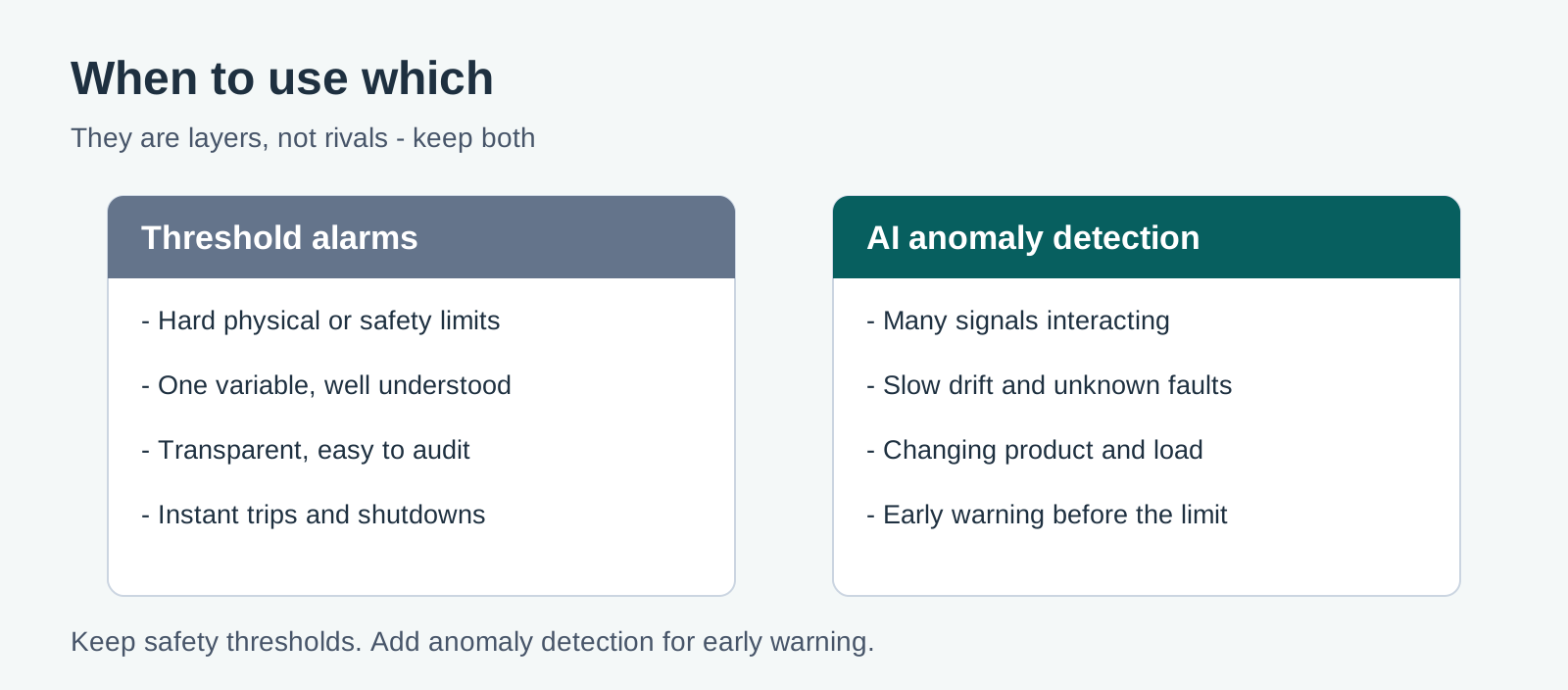
Use threshold alarms when there is a hard physical or safety limit, a single well-understood variable, or a need for instant, auditable trips. Use AI anomaly detection for multivariate processes, slow drift, unknown or evolving failure modes, and conditions that change with product and load.
They are layers, not rivals
The right answer is almost never "replace alarms with AI." Keep your safety thresholds exactly as they are - they are your last line of defense. Add anomaly detection *on top*, as an early-warning layer that gives operators hours or days of notice before a threshold would ever trip. Thresholds tell you something is wrong now; anomaly detection tells you something is becoming wrong.
Use case in practice: a pharma tablet press
On a solid-dose tablet press, a threshold alarm might watch main compression force and trip only when it exceeds a fixed limit - which catches gross faults but nothing subtle. Yet tablet quality (weight, hardness, capping) emerges from the *relationship* between fill depth, pre-compression, main force, and turret speed. AI anomaly detection learns the normal multivariate fingerprint for a given product and flags a batch drifting toward out-of-spec tablets long before any single force reading crosses its limit.
How you would build it: collect the press signals (fill, pre- and main force, turret speed, reject counts) at batch resolution, attach context (product, tooling, campaign), and label past rejected tablets and failed batches. The press keeps its safety trips; anomaly detection sits on top as early warning for QA - exactly the layered setup above.
What AI anomaly detection needs
Anomaly detection is only as good as the data behind it. It needs consistent signals (same tags, units, and time base), enough history of normal to learn from, context (product, shift, setpoint) so it does not confuse a normal changeover with a fault, and labels of known events to tune and validate it. Without labeled examples of real problems, you cannot tell a useful flag from noise.
Practical rule
Do not choose between fixed limits and learned normal - stack them. Keep thresholds for safety and hard limits, and add anomaly detection for early warning on the signals that drift. The work that makes the second layer trustworthy is the same work behind every predictive project: clean, contextual, labeled data.
Build the dataset your anomaly detection needs: import signals, add context, and label known events so a model can learn normal and flag what matters in Predsense labeling: https://www.predsense.ai/products/labeling