Lean purists sometimes see AI as the opposite of everything Lean stands for: expensive, complex, and detached from the gemba. Lean is people, simplicity, and eliminating waste by hand. But look closer and the two are chasing the same goal - remove waste, improve flow, build quality in. AI is not a threat to Lean; it is a new tool for Lean's oldest ambitions, and it maps almost perfectly onto one Lean pillar in particular: jidoka.
This post answers a scoped question: how does artificial intelligence actually fit with Lean manufacturing rather than fight it?
Same goal, sharper tools
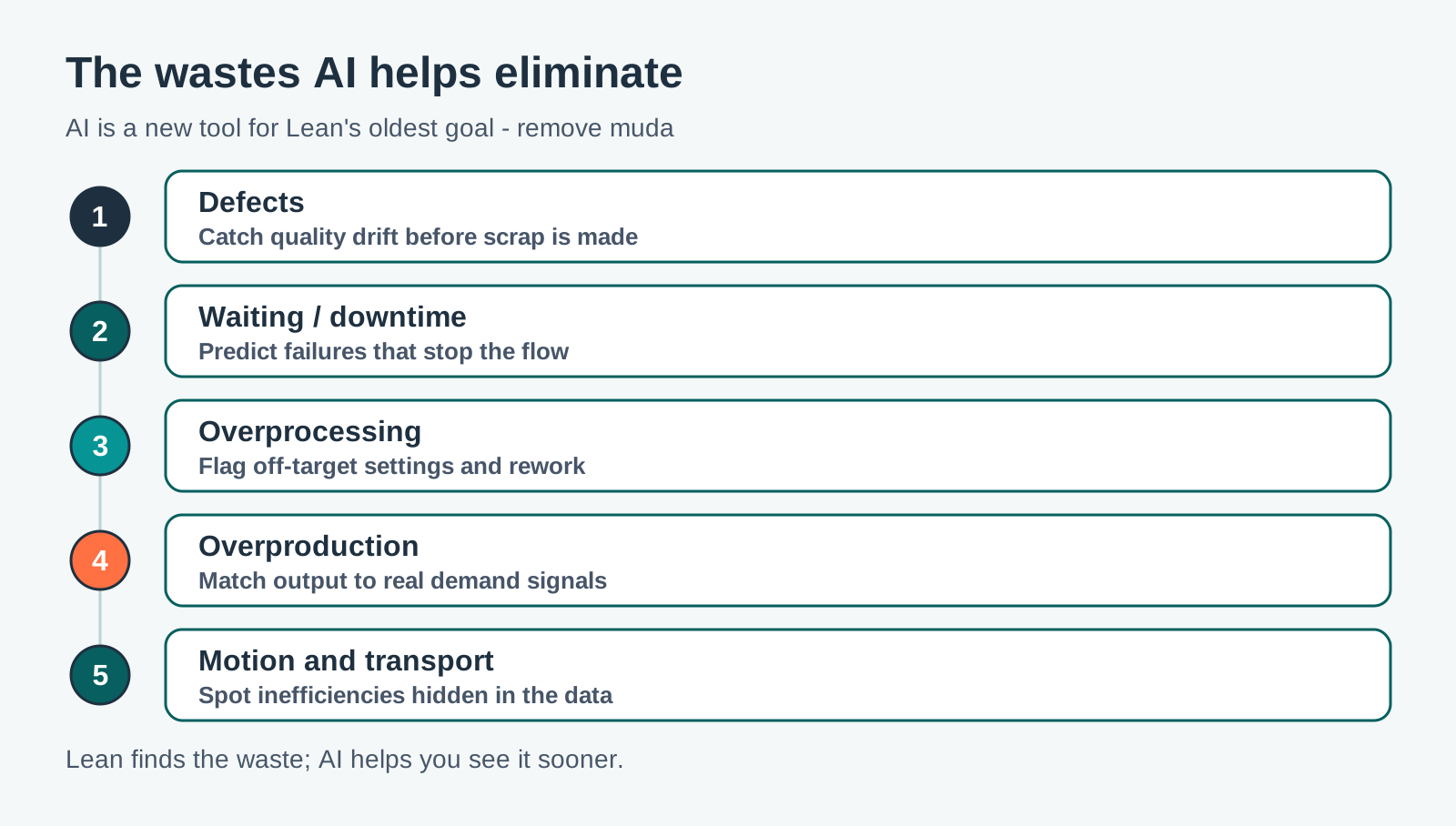
Lean exists to eliminate the eight wastes - defects, waiting, overproduction, and the rest. Every one of them leaves a trace in data. AI is simply a way to see those traces sooner and more completely than a human walking the line ever could.
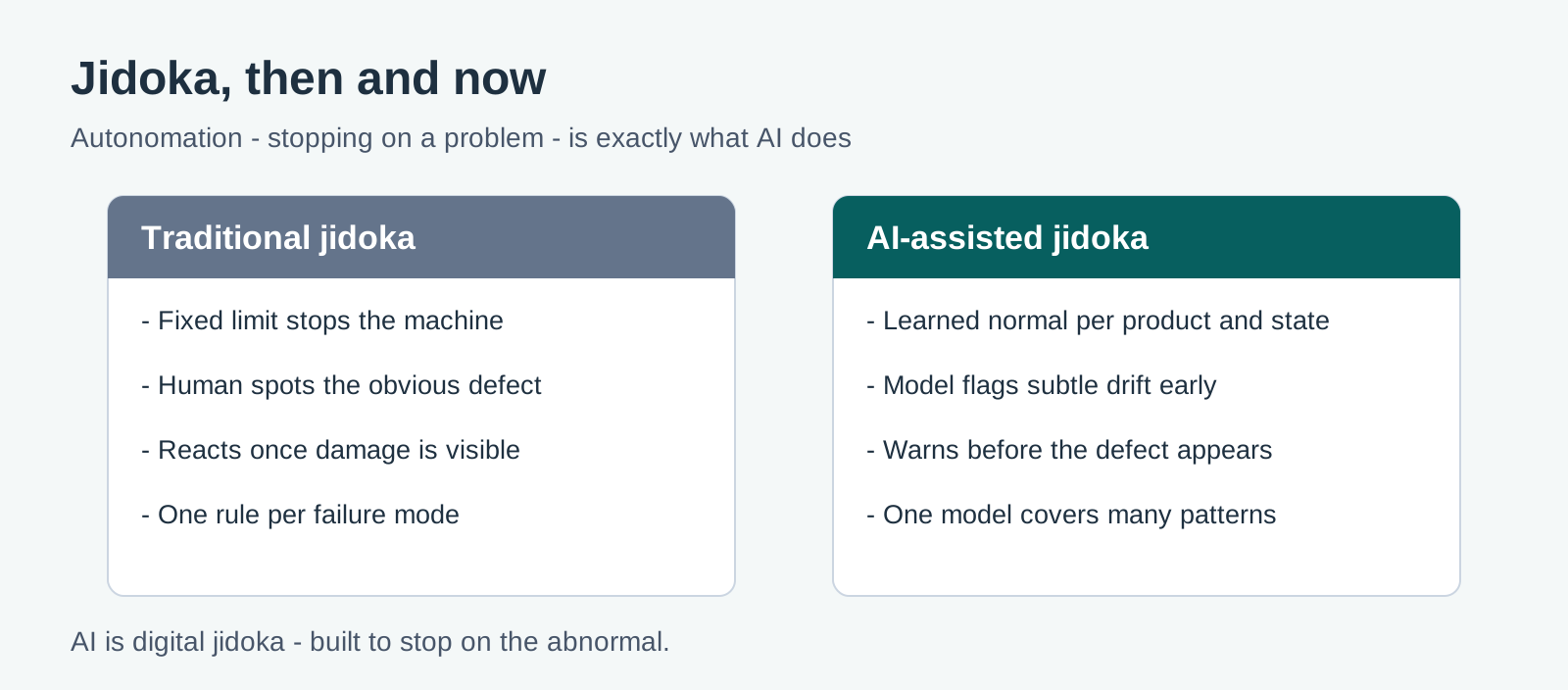
AI is digital jidoka
Jidoka - autonomation, or "automation with a human touch" - means a machine that stops itself when something goes wrong, so defects are never passed downstream. That is precisely what an anomaly-detection model does: it learns what normal looks like and raises a hand the moment the process drifts. AI does not replace jidoka; it upgrades it from a fixed limit switch to a system that understands context.
Where AI amplifies each Lean principle
- Muda (waste): predict downtime, catch defects early, flag off-target settings.
- Flow: anticipate the stoppages that break single-piece flow.
- Standard work: confirm the process is actually running to standard, continuously.
- Kaizen: feed the improvement cycle with data no manual audit could gather.
Keep it Lean: start small and stay on the gemba
The Lean way to adopt AI is the Lean way to do anything: start with one problem at one workstation, involve the people who do the work, and prove value before you scale. AI that arrives as a giant top-down platform violates Lean. AI that a line team uses to solve one nagging waste is Lean.
Use case in practice: AI jidoka on a pharma tablet press
A tablet press must stop before it produces out-of-spec tablets. A traditional limit alarm only fires when weight or hardness is already outside tolerance - after some bad tablets exist.
- The AI upgrade: a model learns the normal signature of compression force per product and speed.
- What it catches: a slow drift in force - the early sign of a punch wearing or granule flow changing - well before any tablet fails spec.
- The jidoka effect: the line stops (or flags) on the abnormal pattern, not on the failed result, so the defect is prevented instead of caught.
- Still Lean: the process engineer who owns the press labeled the past deviations and owns the model - no waste, no black box handed down from above.
Practical rule
Do not frame it as "Lean or AI." Frame it as "AI in service of Lean": a sharper way to see waste, a smarter jidoka, and a data feed for Kaizen. Keep the people and the gemba at the center, and AI becomes the most powerful Lean tool you have added in years.
Bring AI to the gemba, one waste at a time. Start by labeling the abnormal patterns on one line in Predsense labeling: https://www.predsense.ai/products/labeling