Teams often frame it as a choice: root cause analysis or predictive analytics. In practice, they answer different questions at different moments.
Root cause analysis looks backward. Predictive analytics looks forward. That is the core distinction - and the reason the smartest operations programs use both.
What root cause analysis does well.
Root cause analysis (RCA) is a structured way to explain why something already failed. After a downtime event, a quality escape, or a safety incident, RCA gathers evidence - logs, interviews, process data, 5 Whys, fishbone diagrams - and traces the chain back to a fixable cause.
Its strength is depth. RCA turns a painful event into institutional learning: a corrective action, a procedure change, a training gap closed. Without RCA, the same failure mode comes back under a new name.
What predictive analytics does well.
Predictive analytics works on time-series and operational signals to estimate what is likely to happen next - before a stoppage, before yield drifts, before energy spikes. It surfaces early risk patterns that humans would miss in raw data volume.
Its strength is timing. Instead of waiting for the incident report, teams get a window to intervene while production is still running. The value is not prediction for its own sake - it is earlier, lower-cost action.
The comparison at a glance.
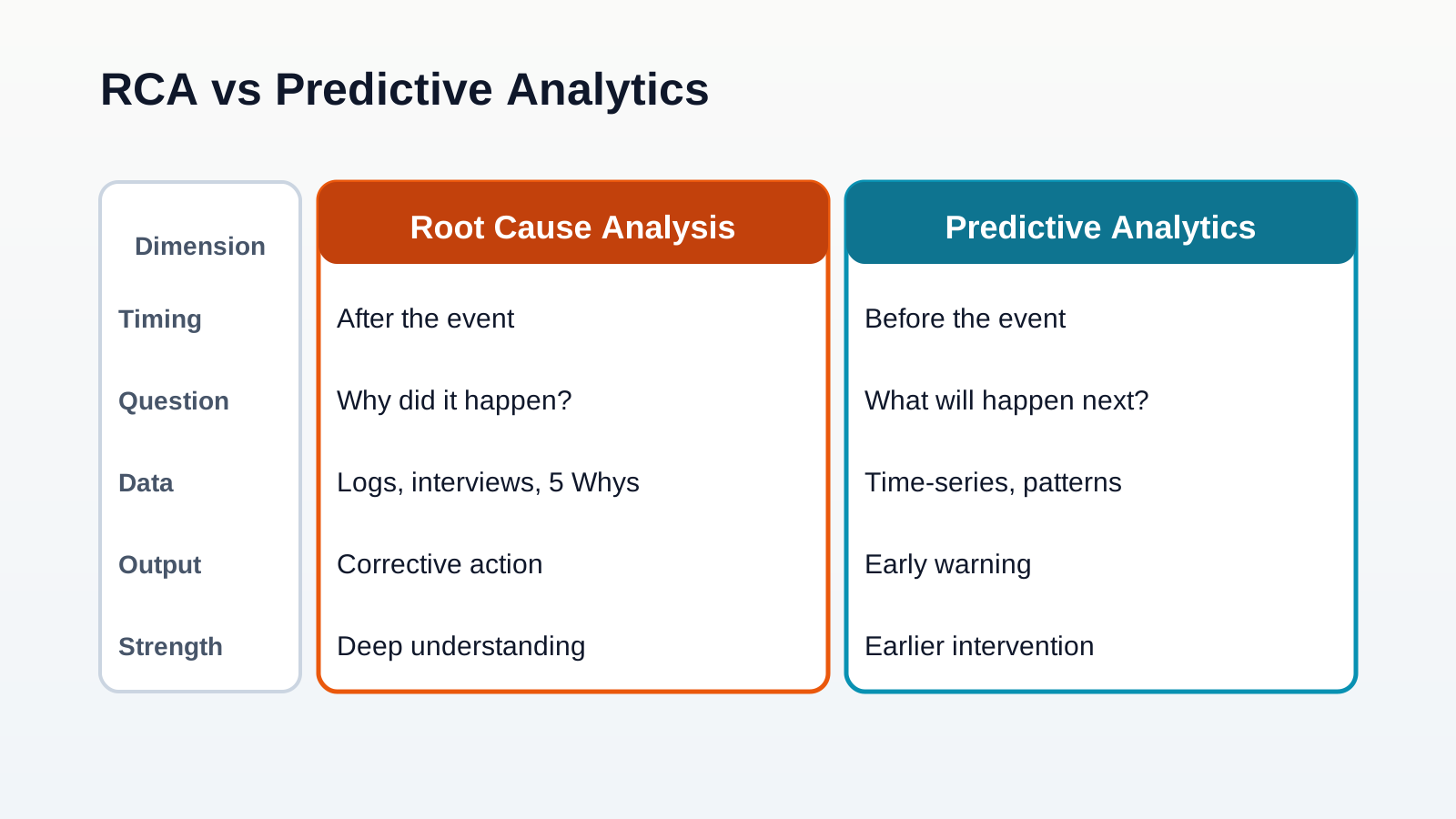
- Timing: RCA after the event; predictive analytics before it.
- Core question: RCA asks why it happened; predictive analytics asks what happens next.
- Typical data: RCA uses logs, interviews, and structured investigation; predictive analytics uses machine signals, trends, and anomalies.
- Output: RCA produces corrective action; predictive analytics produces early warning and prioritized investigation.
- Best for: RCA prevents recurrence; predictive analytics helps prevent first occurrence.
Why "vs" is the wrong frame.
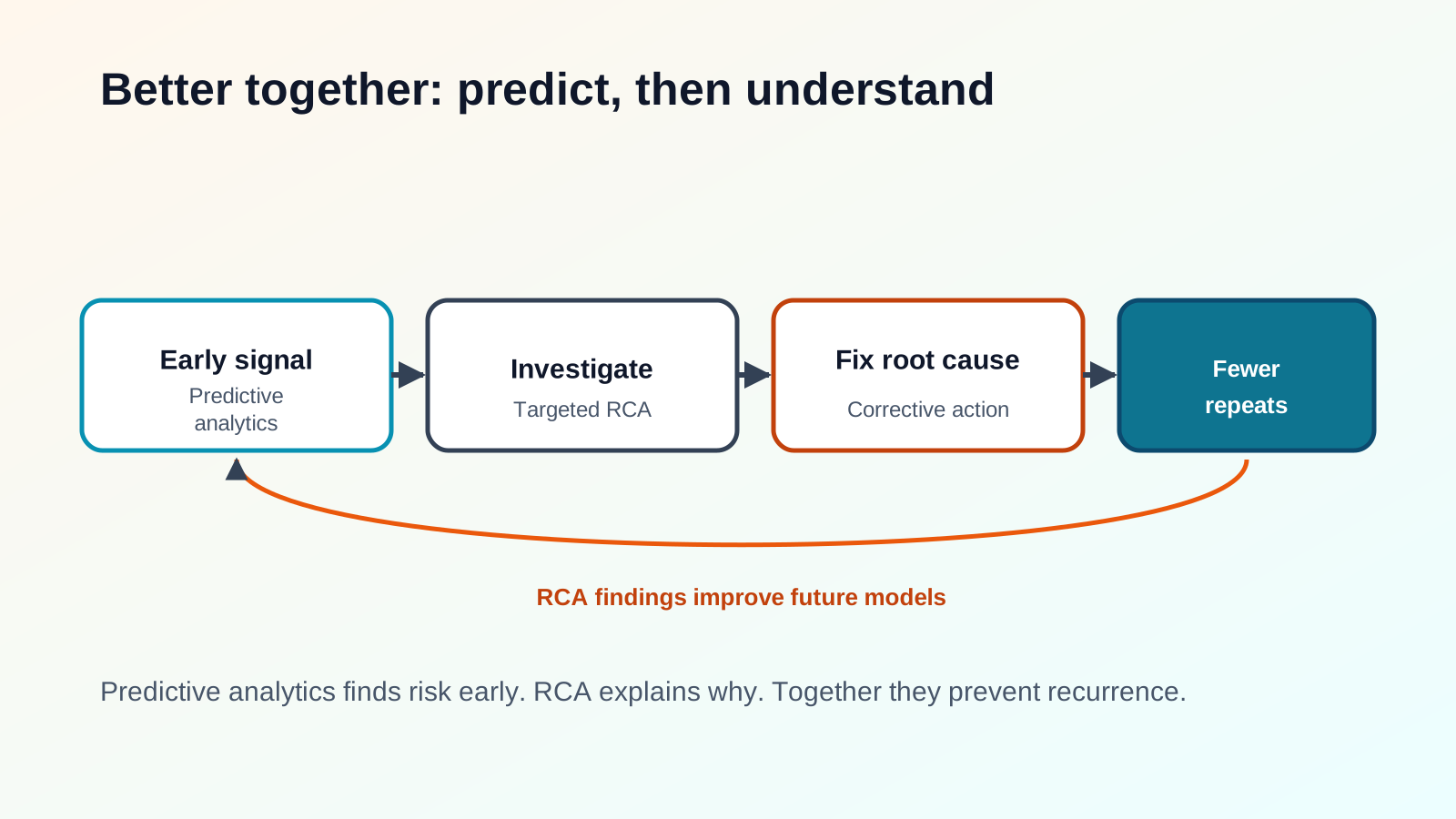
RCA without prediction keeps you expert at explaining yesterday's failures. Prediction without RCA keeps you busy chasing alerts without fixing underlying causes. The loop that actually works:
- Predictive analytics flags an emerging risk early.
- Targeted RCA investigates only what matters - not every noise spike.
- Corrective action removes the root cause.
- Feedback improves the next model and reduces repeat incidents.
When to start with RCA.
Start with RCA when you have a serious incident, a recurring failure mode, or a quality problem that keeps returning. You need understanding before you need another dashboard. RCA is also essential after a predictive alert fires - the alert tells you something is wrong; RCA tells you why.
When to start with predictive analytics.
Start with predictive analytics when you have enough consistent operational data, defined assets or lines, and a team that can act on early signals. The goal is to shrink the gap between "something feels off" and "we know what to check."
Practical rule for operations leaders.
Use predictive analytics to prioritize attention. Use RCA to close the loop. Measure success not by how many alerts you generate, but by how many root causes you eliminate and how rarely they return.
That is predictive analytics vs root cause analysis in manufacturing: not competitors, but partners in the same reliability program.
See how Predsense connects early signals to actionable foresight: https://www.predsense.ai/