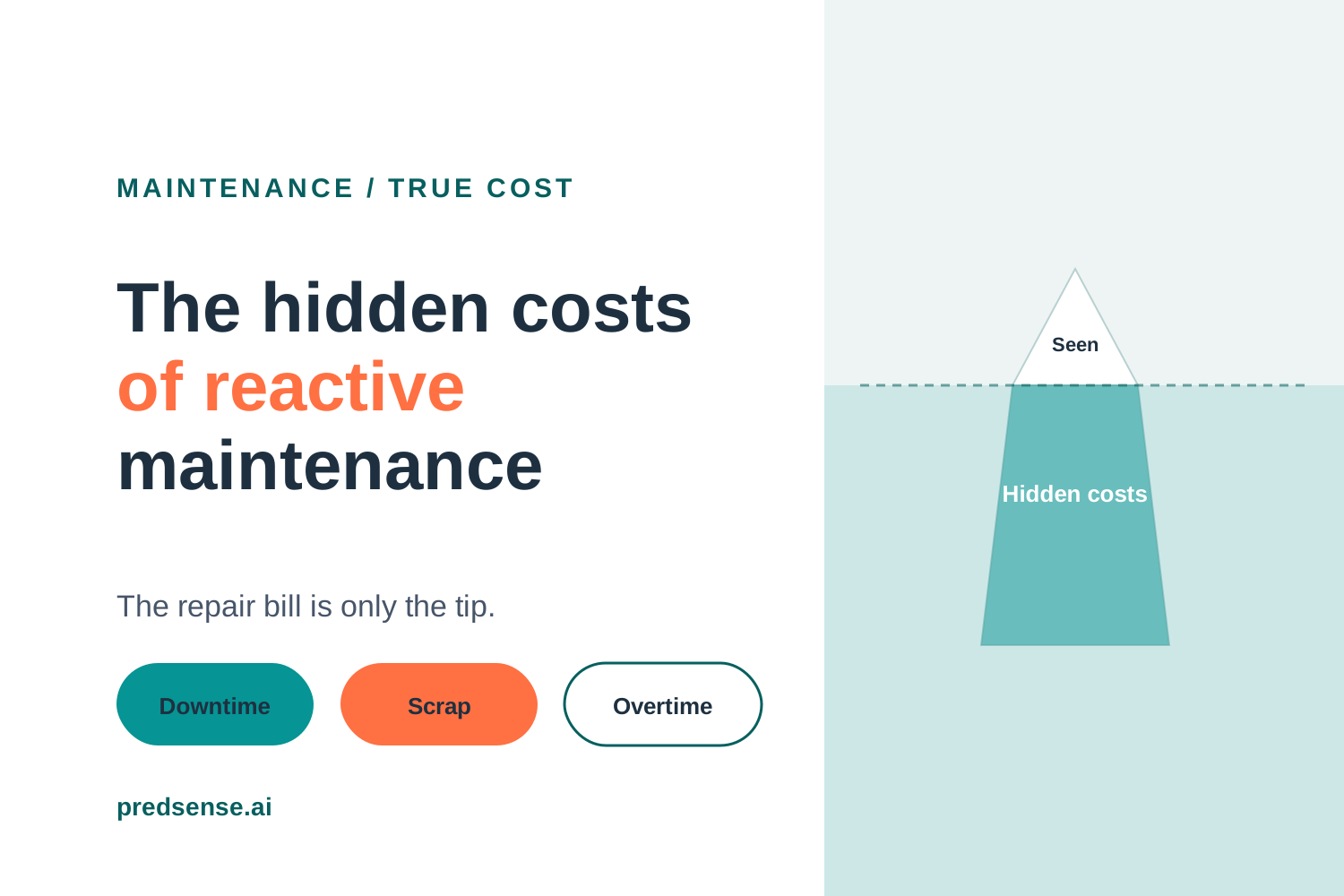
Reactive maintenance - "run it until it breaks" - feels cheap. You only pay when something fails, so the budget looks lean. But the repair invoice is only the tip of an iceberg. The real cost of a breakdown lives below the waterline, spread across downtime, scrap, logistics, overtime, safety, and the life of the asset itself.
This post answers a scoped question: what does reactive maintenance truly cost, and how do you measure the part you cannot see?
Visible vs hidden costs
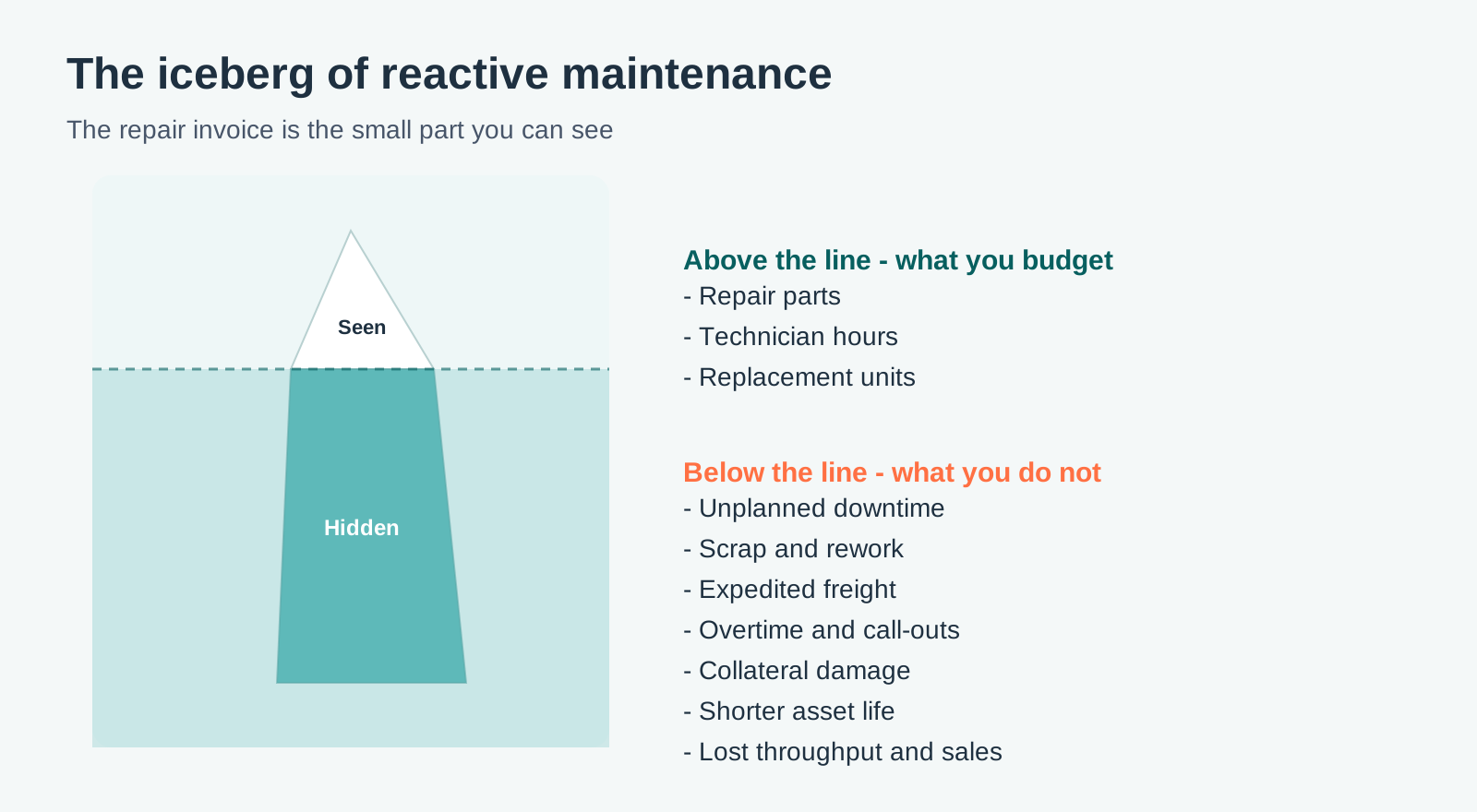
Above the waterline sits what you budget: repair parts, technician hours, replacement units. Below it sits everything a failure drags with it:
- Unplanned downtime - usually the single biggest cost, and it lands on the production budget, not maintenance.
- Collateral damage - one failed component often damages others before the line stops.
- Quality and scrap - equipment drifting toward failure makes bad parts first.
- Expedited logistics - rush freight and premium prices for parts you need *now*.
- Overtime and call-outs - emergency labor at nights and weekends.
- Safety risk - sudden failures are more dangerous than planned work.
- Shortened asset life - running to failure wears assets faster and shortens their usable years.
- Lost throughput and sales - orders delayed or lost when the line is down.
Why reactive looks cheap (and isn't)
The trick of reactive maintenance is accounting, not engineering. The maintenance budget shows only the repair line. The expensive parts - downtime, scrap, rush freight - land in the production, quality, and logistics budgets, so nobody attributes them back to the maintenance *strategy*. The total is real; it is just scattered where no single manager sees it.
Put a number on each hidden cost
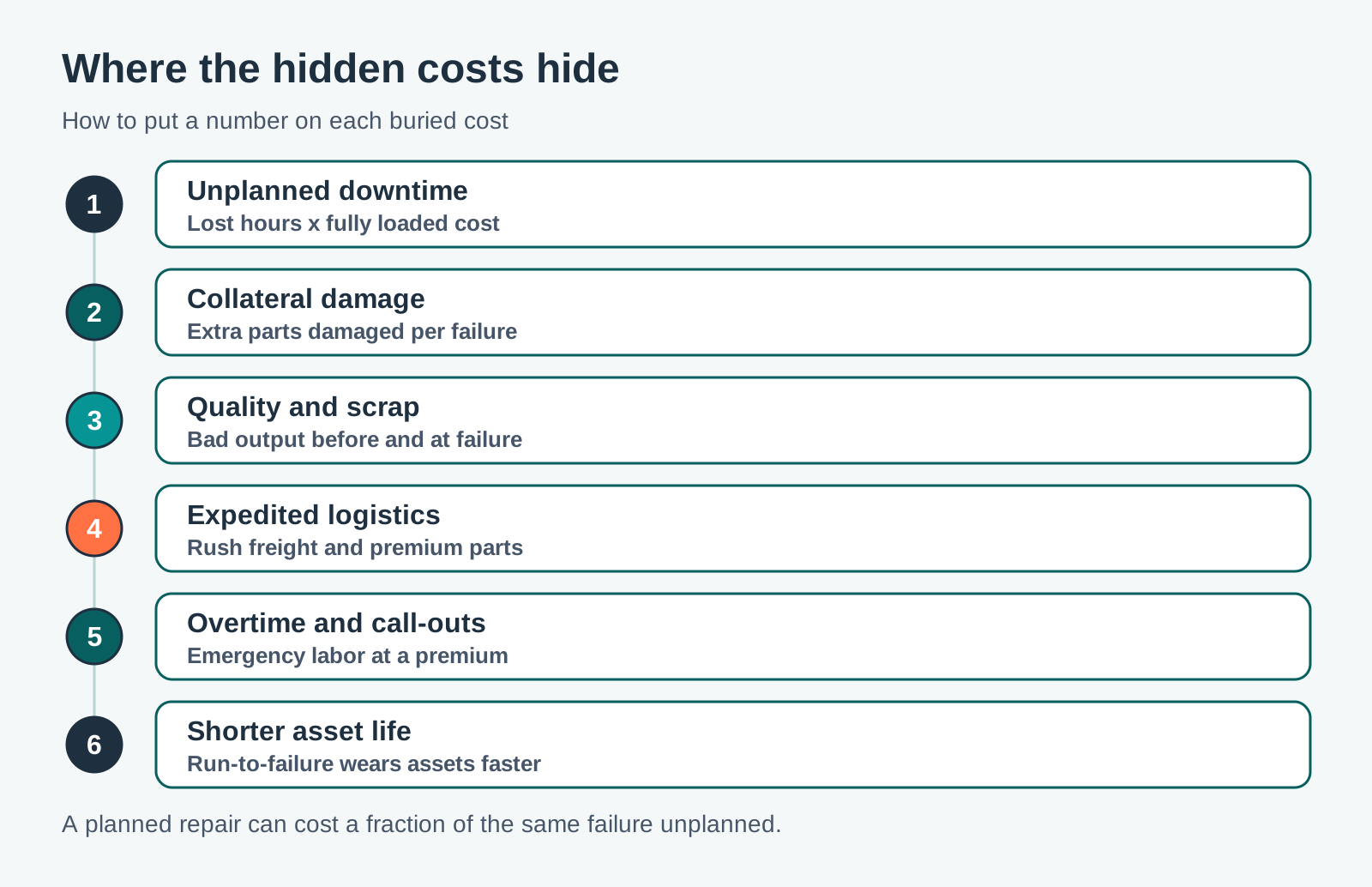
You can estimate every buried cost with data you already have:
- Downtime = failure hours x fully loaded cost per hour (not just labor - include lost margin).
- Collateral = average extra components replaced per unplanned failure.
- Scrap = defective output in the run-up to and during failure.
- Logistics = premium paid on expedited parts vs planned orders.
- Overtime = emergency labor hours x premium rate.
Use case in practice: a filling-line bearing at a dairy plant
Take the drive-gearbox bearing on a yogurt filling line.
Planned: replace it on a schedule for ~500 EUR in parts and labor during a planned CIP window.
Reactive: the same bearing fails mid-shift. Now: 500 EUR part + 8 hours downtime x 4,000 EUR = 32,000 EUR + a damaged shaft (1,500 EUR) + a batch of scrapped product (2,000 EUR) + rush freight (400 EUR) + weekend overtime. The same failure costs 35,000+ EUR reactively versus ~500 EUR planned. Reactive events routinely cost several times their planned equivalent.
How you would build the predictive alternative: collect the gearbox signals (vibration or motor current, temperature), tag them with product and CIP cycles, and label the past bearing failures and the drift that preceded them. With even a handful of labeled failures, a model can warn days ahead - so you fold the fix into the next scheduled CIP window instead of losing a shift.
From reactive to predictive (without over-investing)
Not every asset needs prediction. Rank assets by criticality x failure cost. For low-criticality, cheap-to-fix assets, run-to-failure can be the right call. For critical assets - where the iceberg is deep - move toward condition-based and predictive maintenance. And the first step is not a sensor shopping spree; it is data: consistent signals plus a history of labeled failures the model can learn from.
Practical rule
Reactive maintenance is not cheap - it is *cheap-looking*, because its biggest costs hide in other budgets. Measure the whole iceberg for your critical assets, and the case for predicting failures instead of reacting to them usually makes itself.
Start turning failures into foresight: import your equipment signals, add context to events, and label past failures to build the dataset predictive maintenance needs in Predsense labeling: https://www.predsense.ai/products/labeling