Ask any control-room operator what is wrong with their alarm system and you will rarely hear "it misses things." You will hear "it cries wolf." Most alarms are nuisance alarms - they fire when nothing is actually wrong - and every false alarm spends a little of the operator's trust. Reducing false alarms is not about muting the system; it is about making each alert mean something. Machine learning is very good at exactly this.
This post answers a scoped question: how does machine learning reduce false alarms without hiding the real ones?
This is the *too-many-alarms* side of the story. Its twin - alarms that miss the early signal - is covered in our post on why traditional alerts miss early warnings, and the human cost of the noise is in our post on alert fatigue.
Why fixed thresholds generate so many false alarms
A static limit does not know context. It fires the same way during a startup ramp, a product changeover, a clean-in-place cycle, or steady production - even though "normal" looks completely different in each. To avoid missing real events, engineers set limits tight; to stop the flood of nuisance trips, they set them loose. Either way you lose. The result is an alarm list where most entries are noise.
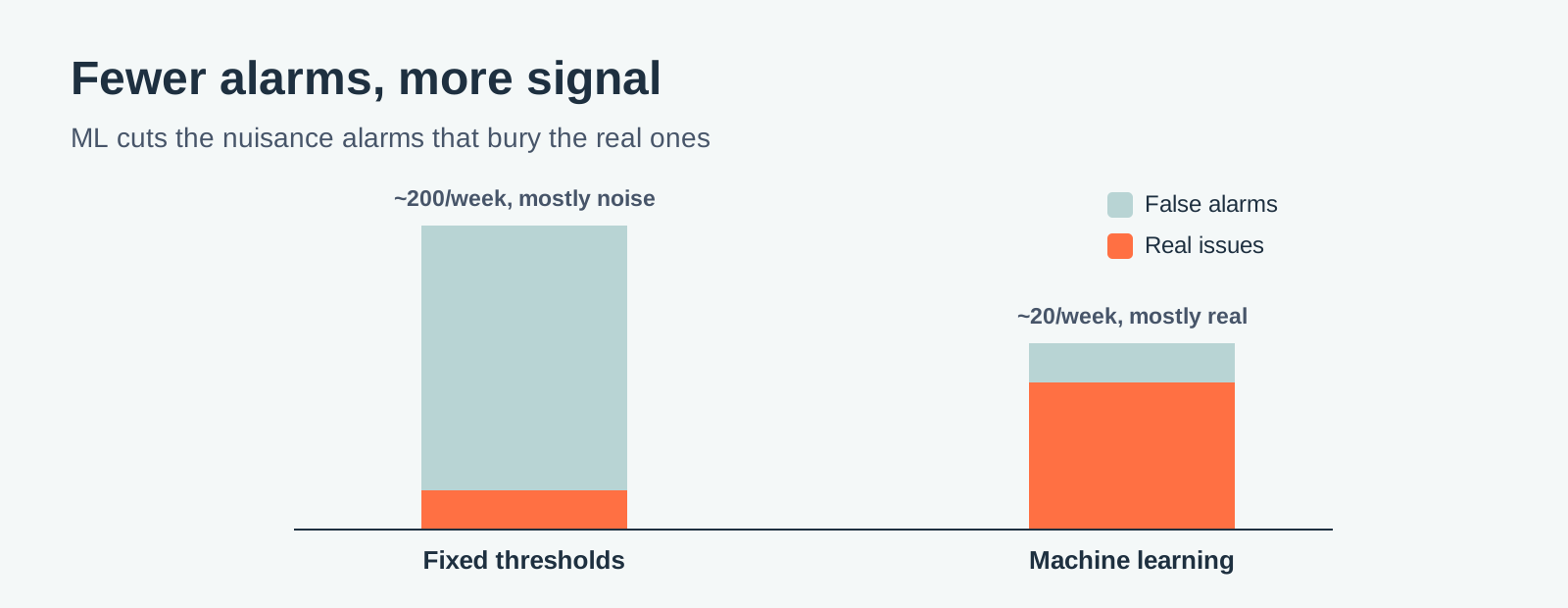
The picture is familiar: a fixed-threshold system throwing off a large pile of alarms, the overwhelming majority of which are false, with a few real issues hidden inside. The goal of ML is the bar on the right - far fewer alarms, and most of them worth acting on.
How machine learning cuts the noise
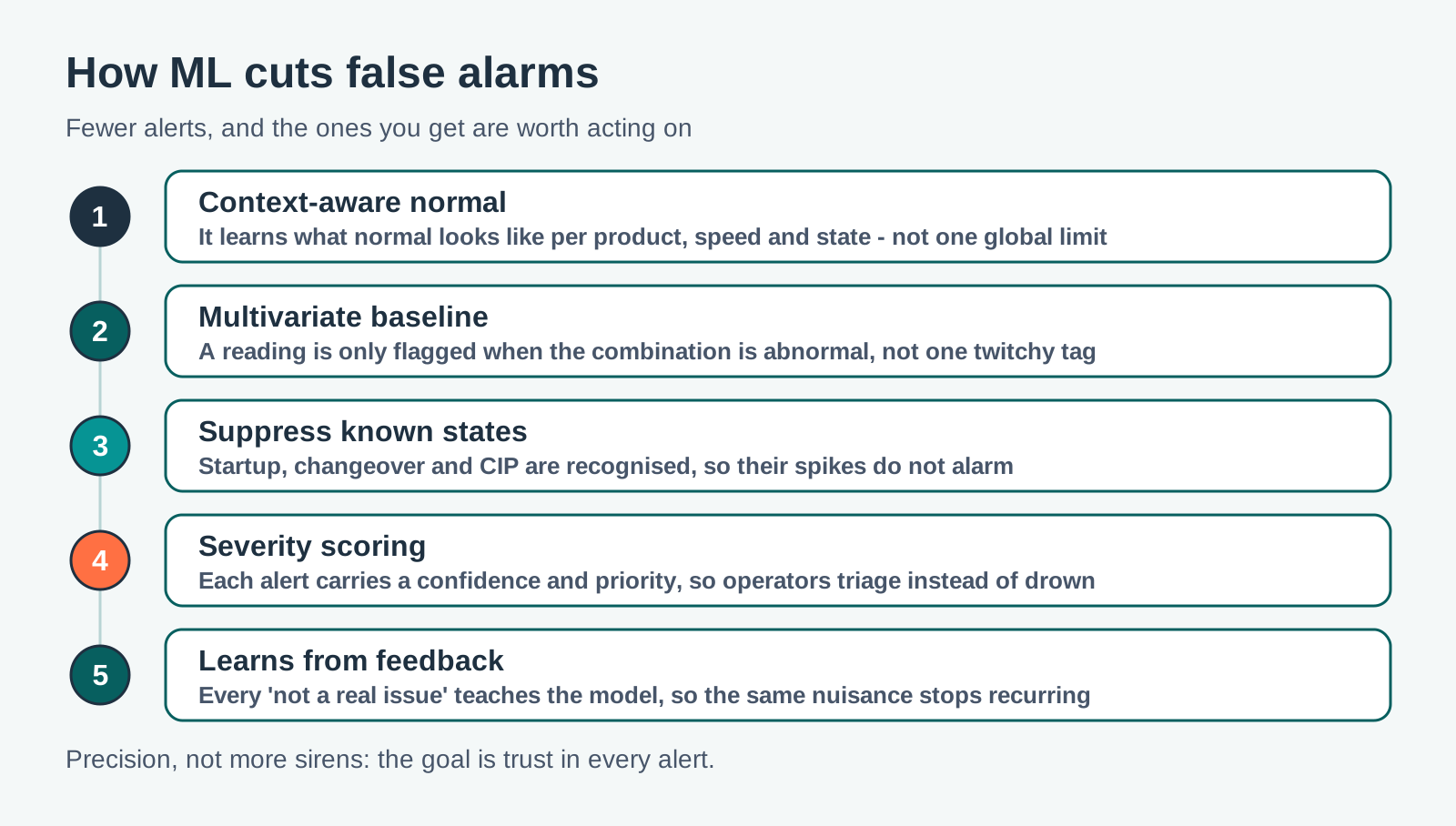
- Context-aware normal: the model learns what normal looks like per product, speed and state, so it does not alarm on a spike that is perfectly normal for a startup.
- Multivariate baseline: it flags a reading only when the *combination* of signals is abnormal, not when one twitchy sensor blips.
- Suppress known states: startup, changeover and CIP are recognized as states, so their expected excursions do not raise alarms.
- Severity scoring: every alert carries a confidence and priority, so operators triage the few that matter instead of drowning in equal-looking ones.
- Learns from feedback: each "not a real issue" teaches the model, so the same nuisance stops coming back.
None of this touches your safety trips - those stay hard-wired. ML sits on top, turning a noisy stream into a short, ranked list.
Use case in practice: a pharma fill-finish line (blister and cartoning)
A solid-dose fill-finish line runs blistering, cartoning and serialization. Its alarm system was tuned tight for GMP, so it fires constantly: a torque blip during a format changeover, a vision-check spike at every startup, a vacuum wobble during CIP. Operators see hundreds of alarms a shift, and almost all are process-normal transitions. The danger is not the noise itself - it is that a genuine sealing-temperature drift, the kind that risks a rejected batch, looks exactly like the wallpaper around it.
How you would build it
- Signals: sealing temperature and pressure, forming torque, vision-inspection results, vacuum, line speed - from the PLC and the line's inspection system.
- Context: SKU and format, line state (startup / changeover / CIP / steady run), and batch ID, so the model has a separate notion of normal for each state.
- What you label: the historical alarms marked as "nuisance" versus the few that preceded a real deviation or reject, so the model learns which patterns actually matter. (See our post on what data labeling is.)
- Who reacts: the line operator now gets a short, ranked list; a high-severity sealing-drift alert stands out instead of being buried, and QA is looped in before a batch is at risk.
A quick worked example
Suppose the line throws ~300 alarms per shift, and about 3 in 100 correspond to something worth acting on. An operator cannot sustain attention across 300 events, so the 9 real ones get acknowledged-and-ignored with the rest. Push the same data through a context-aware model and the list drops to ~20 alerts per shift, mostly real, each with a severity. The real sealing-temperature drift now sits at the top of a 20-item list instead of lost in 300 - and the batch is saved.
Practical rule
You do not reduce false alarms by muting the system; you reduce them by giving it context. Let the model learn normal per state and per product, score severity, and learn from operator feedback - and the alarms that survive are the ones people should actually trust.
Context and labels are what make alarms trustworthy. Teach the model which alarms mattered - import your data, add state and product context, and label real events vs nuisance in Predsense labeling: https://www.predsense.ai/products/labeling