A common myth blocks predictive analytics programs: "We need more sensors first." In most plants, the bigger gap is not hardware - it is connecting and interpreting data that already exists. Predictive analytics without sensors is not only possible; it is often the fastest path to value.
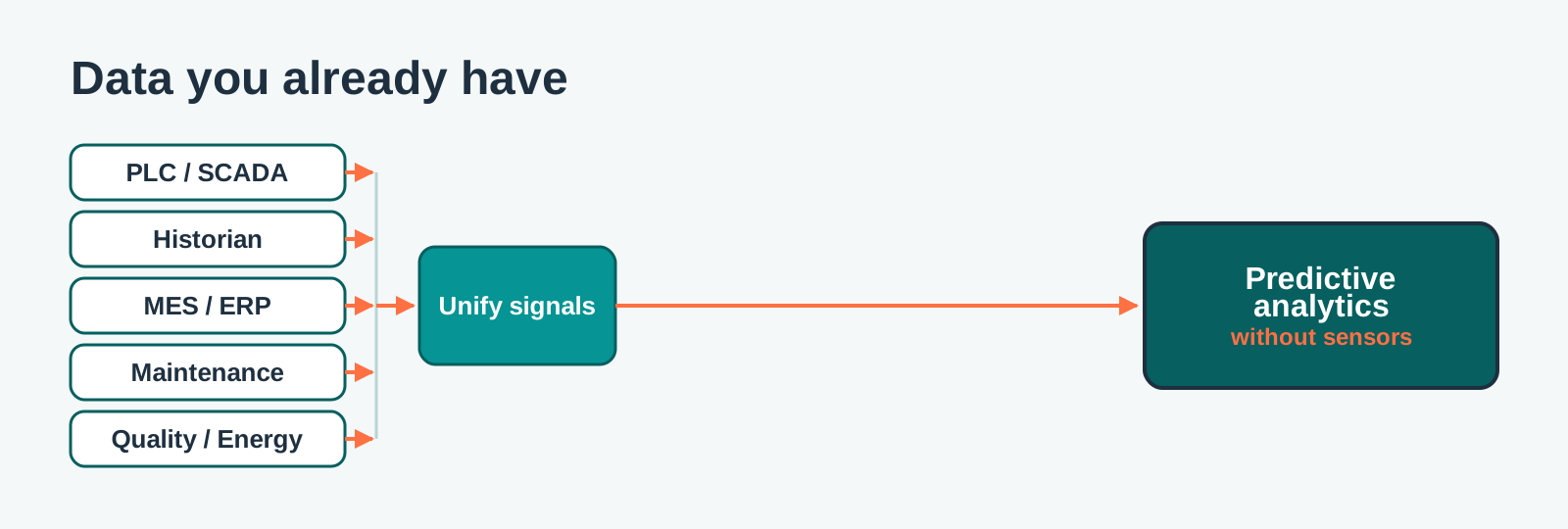
Signals you likely already have
- PLC and SCADA process values (speed, temperature, pressure, counts)
- Historian archives and trend data
- MES/ERP production records, stops, and orders
- Maintenance work orders and technician notes
- Quality measurements and reject logs
- Energy consumption per line or asset
These streams carry early warning patterns long before a dedicated vibration sensor is installed.
Virtual and derived signals
Even when direct measurement is missing, teams can derive indicators:
- Motor current as a proxy for mechanical load
- Cycle time drift from PLC timestamps
- Startup curves compared to baseline
- Cumulative counters vs expected throughput
- Alarm frequency and fault-code sequences
The goal is not perfect physics - it is detecting meaningful change early enough to act.
When additional sensors still make sense
Add sensors when existing signals cannot observe the failure mode (e.g., bearing defect without vibration data on critical spindles). But do not delay a program because sensor projects are queued for next year.
A practical 4-step start (no sensor project required)
- Pick one critical line or asset class
- Unify available signals into one time-aligned view
- Define "normal" with operators and maintenance experts
- Monitor for drift and precursors; investigate early warnings before hard stops

What breaks programs without sensors
- Data trapped in silos (PLC vs MES vs paper)
- No agreed definition of normal for each product/run
- Alerts with no ownership or action path
- Expecting prediction without context (SKU, shift, recipe)
The business case
Skipping a multi-year sensor rollout does not mean skipping reliability gains. Plants that start with existing OT and IT data often prove value in weeks - then fund targeted sensor additions where models show blind spots.
Predictive analytics without sensors is not a compromise. For many manufacturers, it is the right first move.
See how Predsense turns existing operational data into early warnings: https://www.predsense.ai/