Most predictive maintenance programs stall at the same question: do we have enough data? The honest answer is that you rarely need perfect data on day one. You need the right layers connected in a way models and operators can actually use.
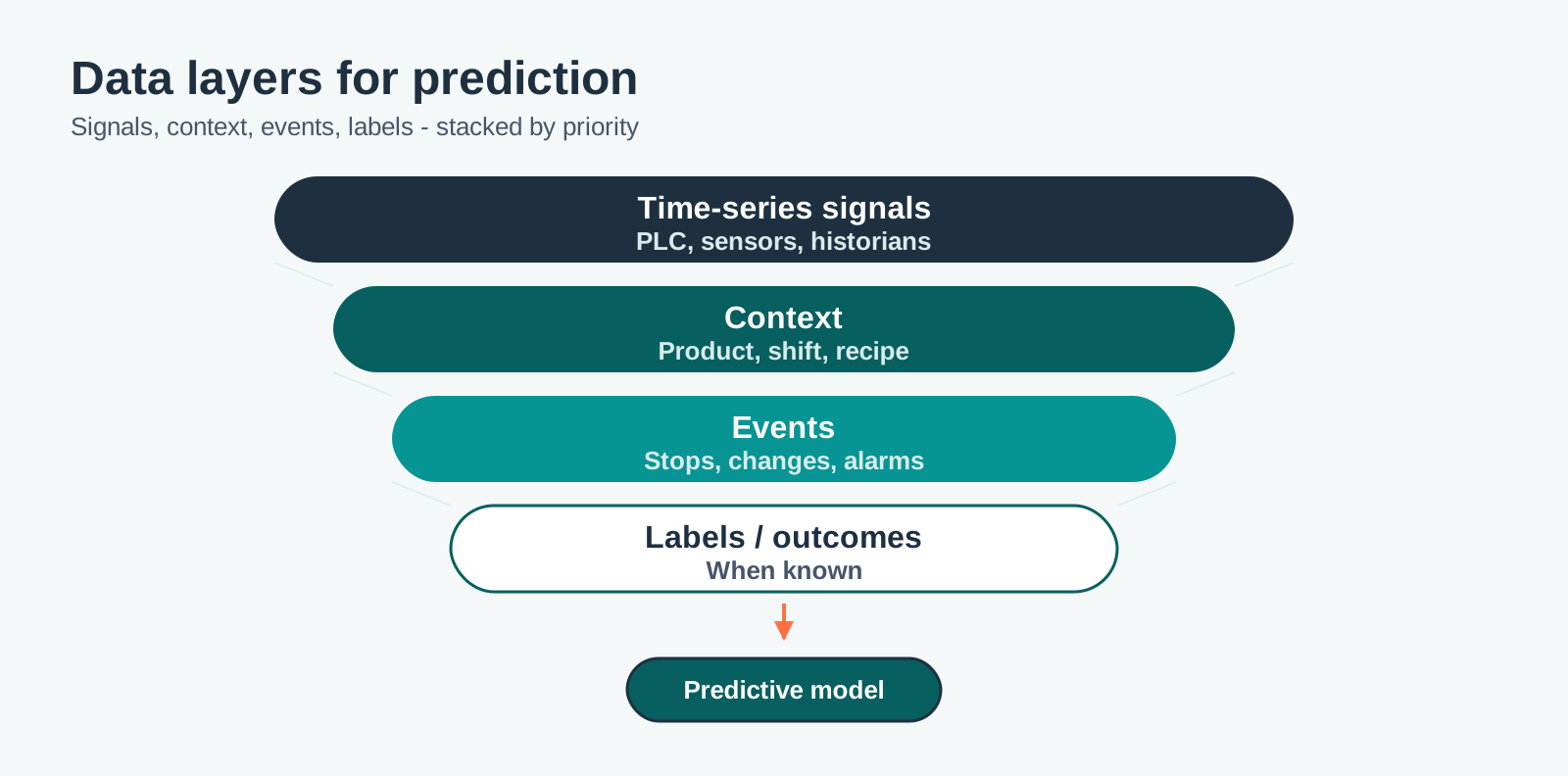
Layer 1: Time-series signals
This is the foundation. Signals from PLCs, SCADA, historians, or existing sensors - speed, temperature, pressure, vibration proxies (motor current), flow, torque - sampled at a consistent interval for a defined asset or line. Without time-series, you cannot detect drift or emerging failure patterns.
Layer 2: Context
Raw signals without context create false alarms. Context links a data point to what was happening: product or SKU, recipe, shift, batch, line speed target, ambient conditions. Context turns "temperature went up" into "temperature rose during SKU change on line 3."
Layer 3: Events
Timestamped events explain discontinuities: machine stops, fault codes, changeovers, maintenance actions, quality holds. Events anchor models to operational reality and help separate normal process variation from risk.
Layer 4: Labels and outcomes (when available)
Labels are not required to start, but they accelerate learning: confirmed failures, replaced components, root-cause categories, work-order outcomes. Even partial labels from maintenance logs beat no feedback at all.
Minimum viable data set
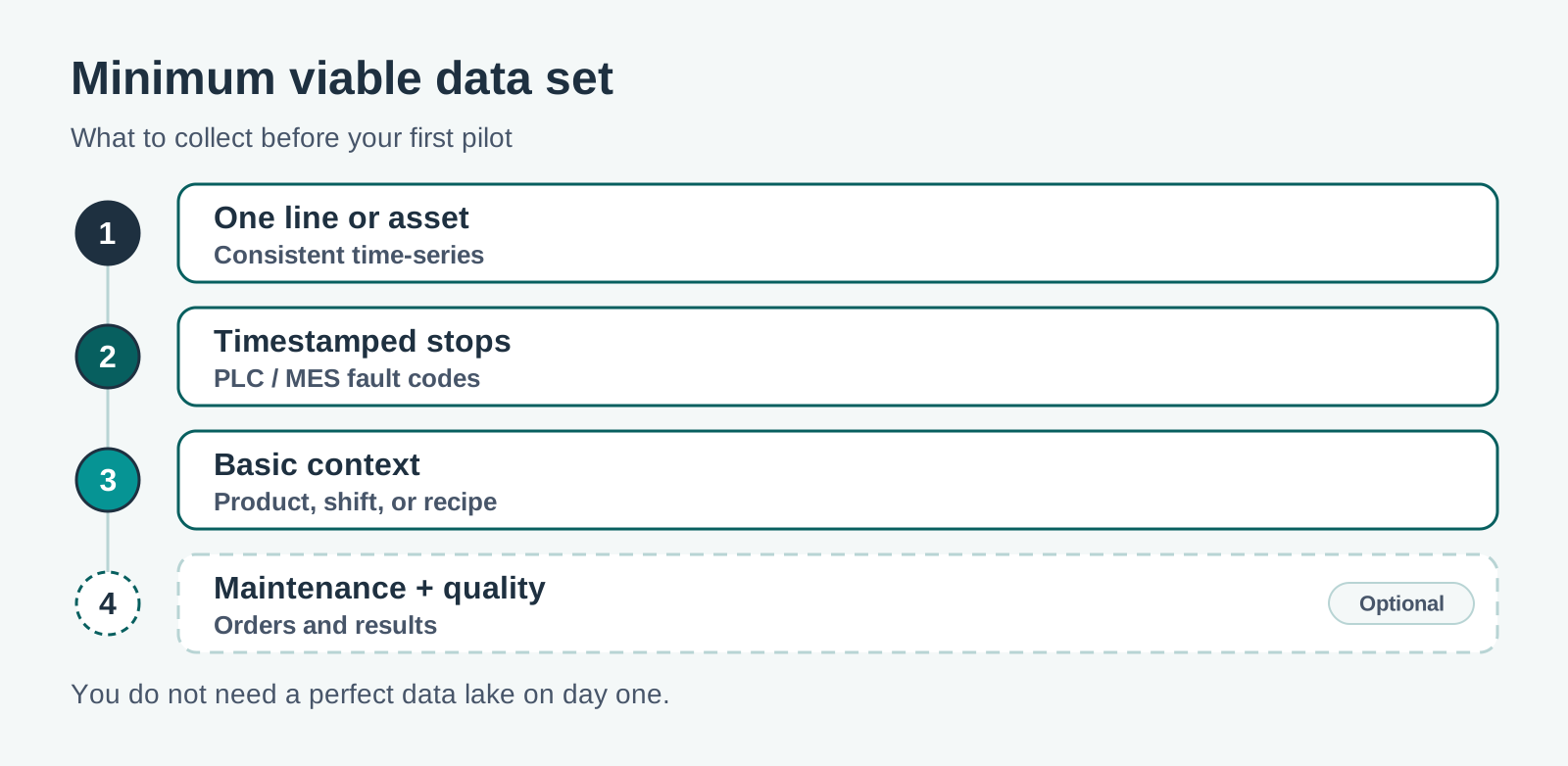
You can pilot predictive maintenance with:
- One line or asset class with consistent time-series
- Stop/start or fault codes from PLC or MES
- Basic context (product, shift, or recipe)
- Optional: maintenance work orders and quality results
What you do not need on day one
- A company-wide data lake
- New sensor hardware on every asset
- Years of perfectly labeled failure history
- Unified ERP/MES/SCADA before the first pilot
How to grow data quality over time
Start narrow. Unify signals for one use case, agree with domain experts what "normal" means, capture outcomes when failures occur, and feed those outcomes back into models. Each loop improves precision and trust.
Practical rule
If you can answer three questions for one asset, you can start: what signals change before problems, what context defines normal, and what events mark stops or faults. Everything else is scaling.
From layers to a labeled dataset (in practice)
The four layers are not an abstract data-lake exercise. On one pilot line, teams connect them with traceable annotations:
- Import PLC/historian exports (CSV or Excel) as the time-series base
- Attach context to events - product, shift, fault code, maintenance action - on the right time windows
- Label stops and anomalies manually on the chart, or with rules when the same threshold pattern repeats
- Use AI-assisted search to highlight candidate anomalies in plain language before you commit labels
- Export labeled time-series for models, ROI proof, or handoff to reliability engineering
You do not need perfect labels before the first upload. Start with signals plus stops; add context and anomaly labels as operators validate what mattered.
Try it on one asset: upload a sample file, add context to events, label anomalies, and export a minimum viable dataset in Predsense labeling: https://www.predsense.ai/products/labeling