Operators are extraordinary at their job - but they are human. They watch a handful of screens, on a shift, split across dozens of tasks, while thousands of signals stream past. AI does not get bored, does not blink at 3 a.m., and does not stop noticing a noise it hears every day. That is why a well-built model often flags a developing problem hours or days before a person would - not because it is smarter, but because it is watching more, all the time.
This post answers a scoped question: how does AI spot problems before the people on the floor do - and what exactly is it catching that a human cannot?
This is the human-limits view. For the machine side - why fixed alerts miss early signals - see that post; for what the underlying technique is, see our post on what anomaly detection is.
What humans are - and are not - built for
People are excellent at judgment, context and improvisation. They are not built to watch two thousand tags at once, to hold a precise memory of what a signal looked like three weeks ago, or to notice a 0.3% daily drift. Those are exactly the tasks where a model shines.
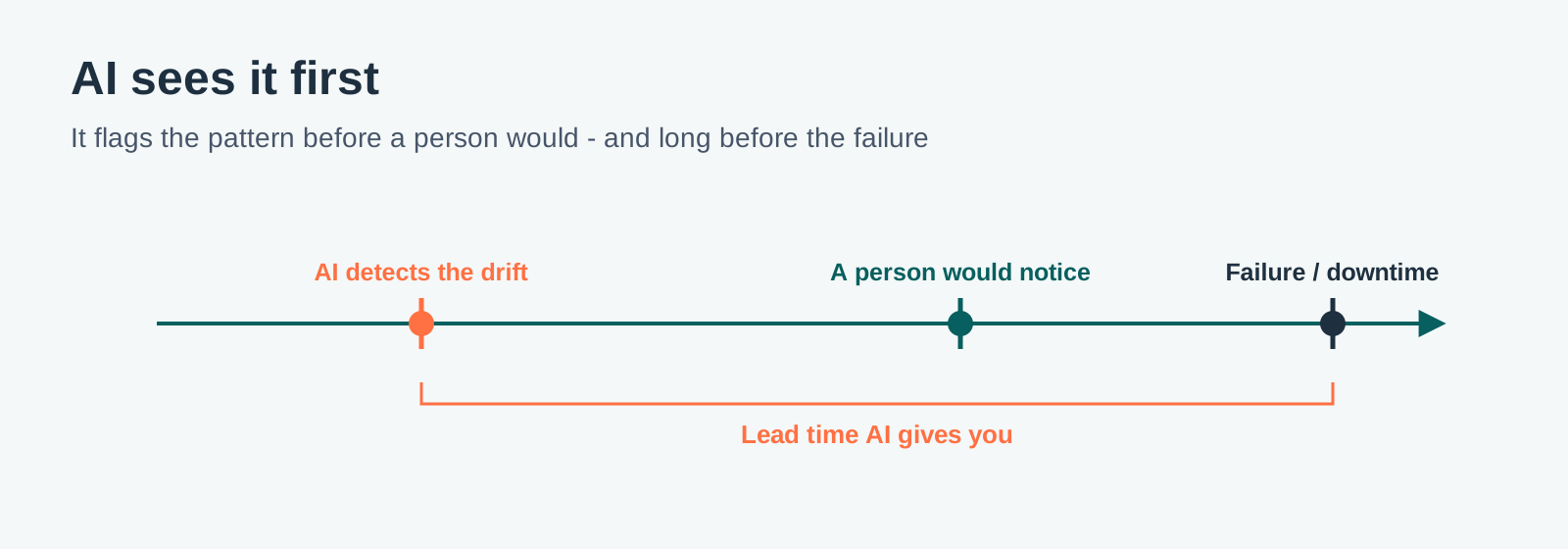
On a timeline, the failure sits on the right. A person tends to notice the problem only when it becomes obvious - loud, hot, or already tripping. AI can flag the same event much earlier, at the first faint change in the pattern. The gap between those two points is lead time - the room you get to plan a fix instead of react to a breakdown.
What AI catches that people cannot
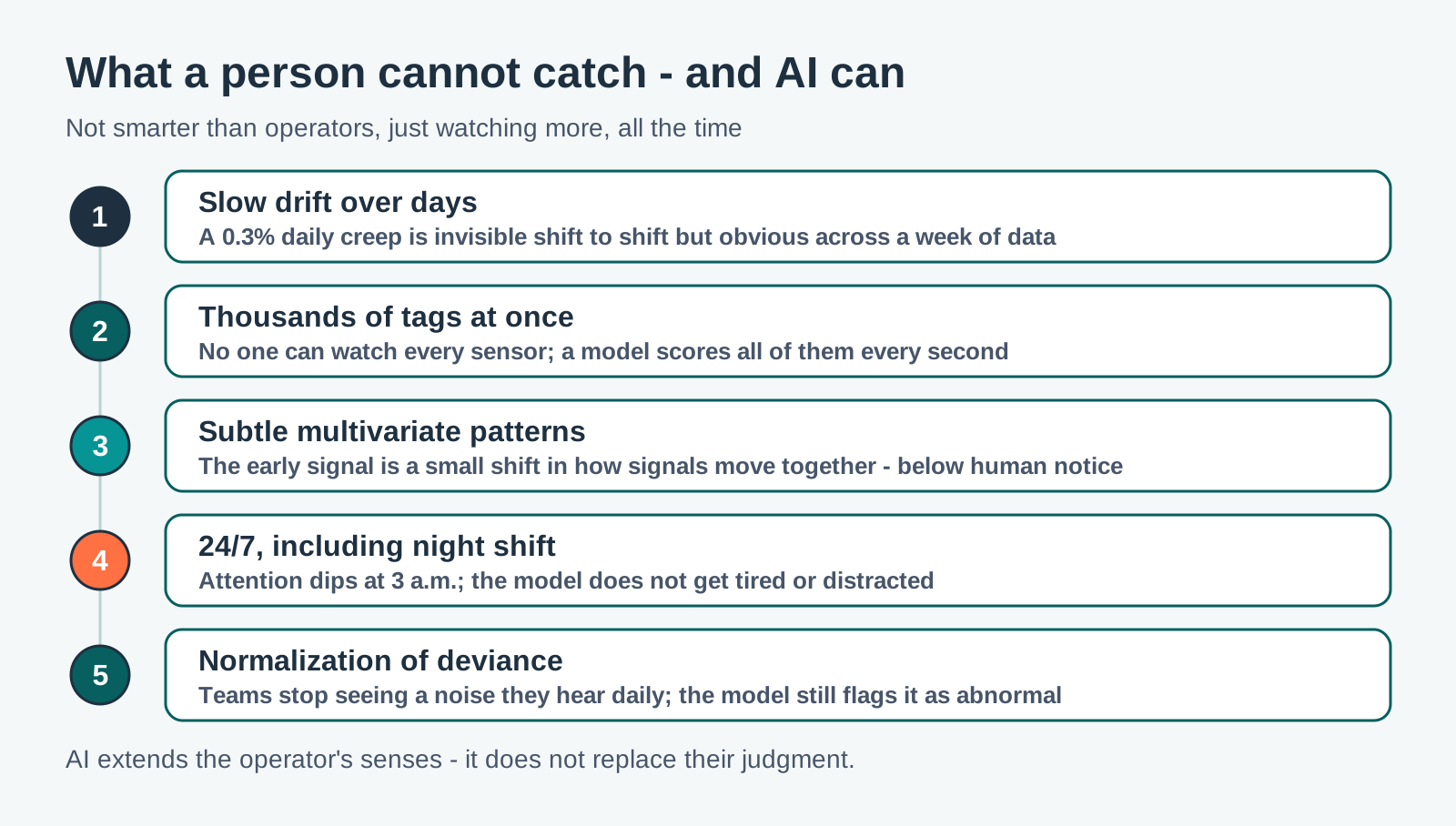
- Slow drift over days that is invisible shift to shift but obvious across a week of data.
- Thousands of tags at once, each scored every second, with no fatigue.
- Subtle multivariate patterns - the early signal is often a small change in how signals move *together*, below the threshold of human notice.
- 24/7 attention, including the small hours when vigilance naturally dips.
- Normalization of deviance - the model still flags a nagging noise the team has learned to tune out.
The point is not to replace the operator. It is to extend their senses, then let their judgment decide what to do.
Use case in practice: a dairy separator (centrifuge)
A high-speed centrifuge separates cream from milk at a dairy. As its bowl slowly accumulates deposit or a bearing begins to wear, a tiny imbalance grows. For days the change is far too small to feel or hear over a running plant; the vibration is still well within the trip limit and every temperature looks normal. Operators, busy across the whole process, have no reason to look. By the time the vibration is loud enough for a person to notice on the floor, the imbalance is advanced and a hard trip - or bowl damage - is close.
How you would build it
- Signals: vibration bands on the bowl and bearings, drive current and speed, bearing temperatures, throughput - from the PLC and a vibration sensor.
- Context: product and run (milk vs cream, CIP vs production), speed setpoint and time since last cleaning, so normal is defined for each condition.
- What you label: past imbalance events, bearing changes and unscheduled cleanings, so the model learns the multi-signal signature that leads up to them. (See our post on what data labeling is.)
- Who reacts: the model raises an early-warning flag days ahead; the shift lead schedules a cleaning or bearing service in planned downtime, long before a human would have felt anything.
A quick worked example
Suppose the imbalance signature is present for eight days before a human would notice it on the floor, and ten days before a hard trip. A person acting on "when it gets loud" has roughly two days to react, at best, usually under load. The model, watching vibration-vs-speed-vs-temperature together, flags day two or three - turning a rushed, risky intervention into a calm, scheduled one. Same signals; the difference is a monitor that never looks away.
Practical rule
Do not ask people to do the one thing they are worst at - continuous, precise, multi-signal vigilance - and then blame them for missing a slow drift. Let AI do the watching and surface the early signal; let your operators do what they are best at - deciding and acting.
AI learns "what to watch for" from your labeled history. Give it examples of what went wrong and the signals around it - import your data, add context, and label the events in Predsense labeling: https://www.predsense.ai/products/labeling