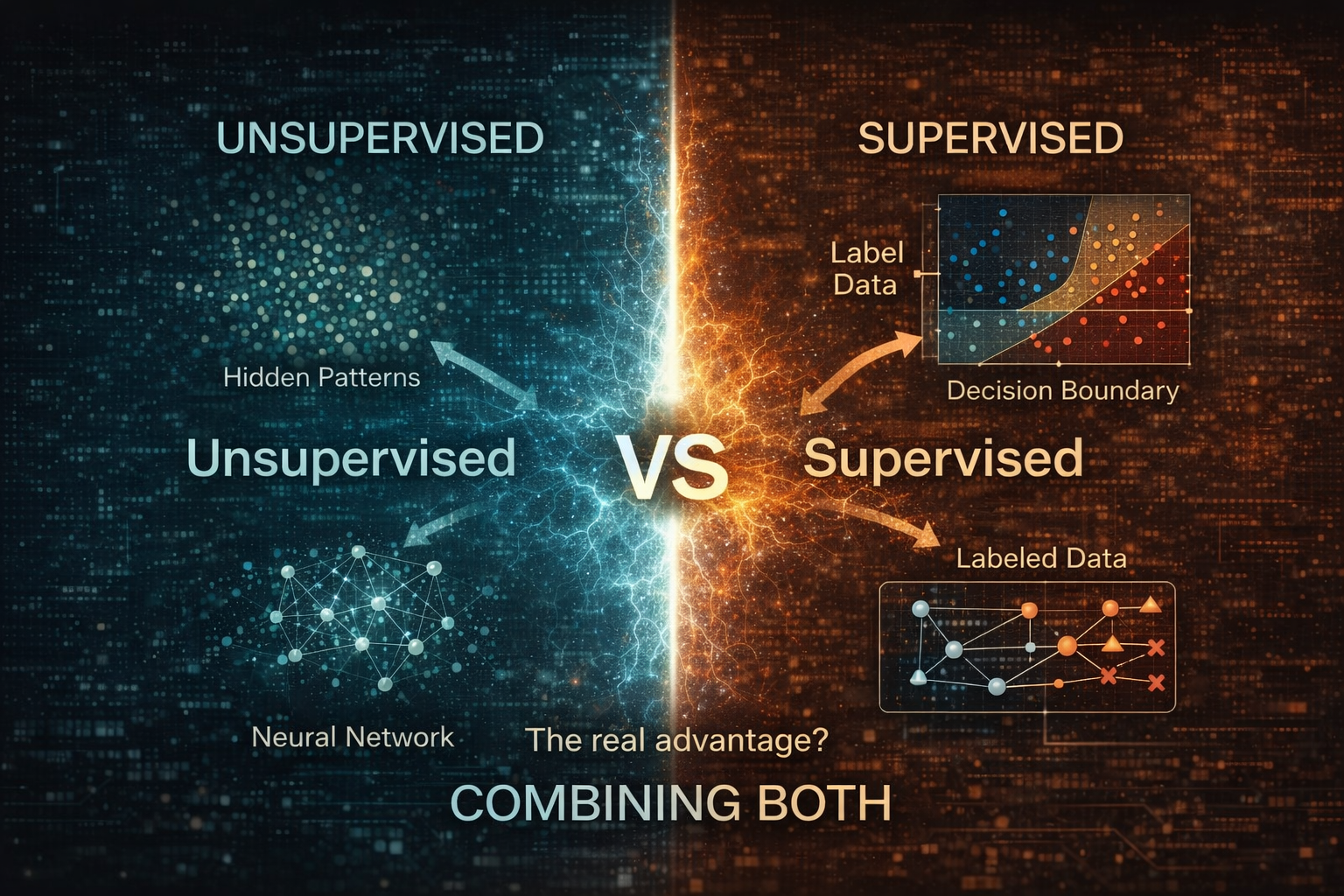
Supervised vs Unsupervised. It sounds like a technical choice. In reality, it is a business decision about what you want from your data: certainty on known problems, or discovery beyond what you already wrote down.
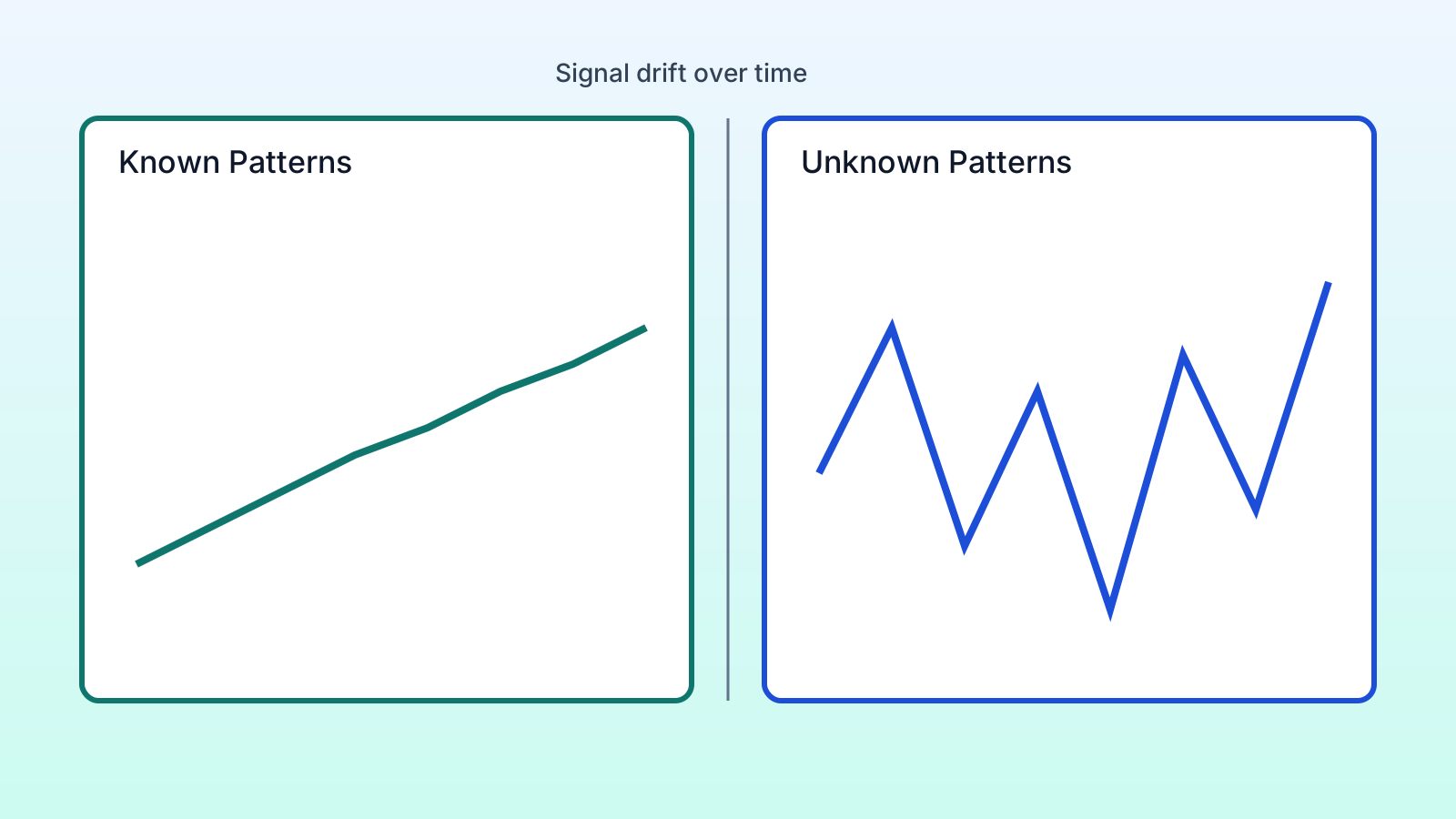
Supervised learning is powerful - if you already know what you are looking for. You label the data, train the model, and detect patterns you have explicitly defined. That is the right path when failure modes are understood, labels are stable, and the goal is to scale detection of those known cases across assets and sites.
But here is the catch: it only finds what you have already seen before. If an issue was not part of the training vocabulary, the system may not flag it. In operations, that blind spot matters: new failure combinations, rare regimes, and subtle drifts often appear before anyone updates a label schema.
Unsupervised learning flips the script. No labels. No fixed assumptions about what "bad" looks like. The model surfaces structure, clusters, and deviations directly from the data. That opens the door to:
- hidden anomalies you did not expect,
- early signals before failures are fully defined in a ticket system,
- insights beyond predefined rules and thresholds.
In practice, most mature programs use both. Supervised helps you scale known use cases with precision. Unsupervised helps you discover what you are missing and prioritize where to invest labeling and domain review next.
Supervised helps you scale known use-cases. Unsupervised helps you discover what you are missing.
If you are working with time-series data from production, energy, or logistics, the question is not which approach "wins" in theory - it is how you combine them so experts move faster from raw signals to confident action.
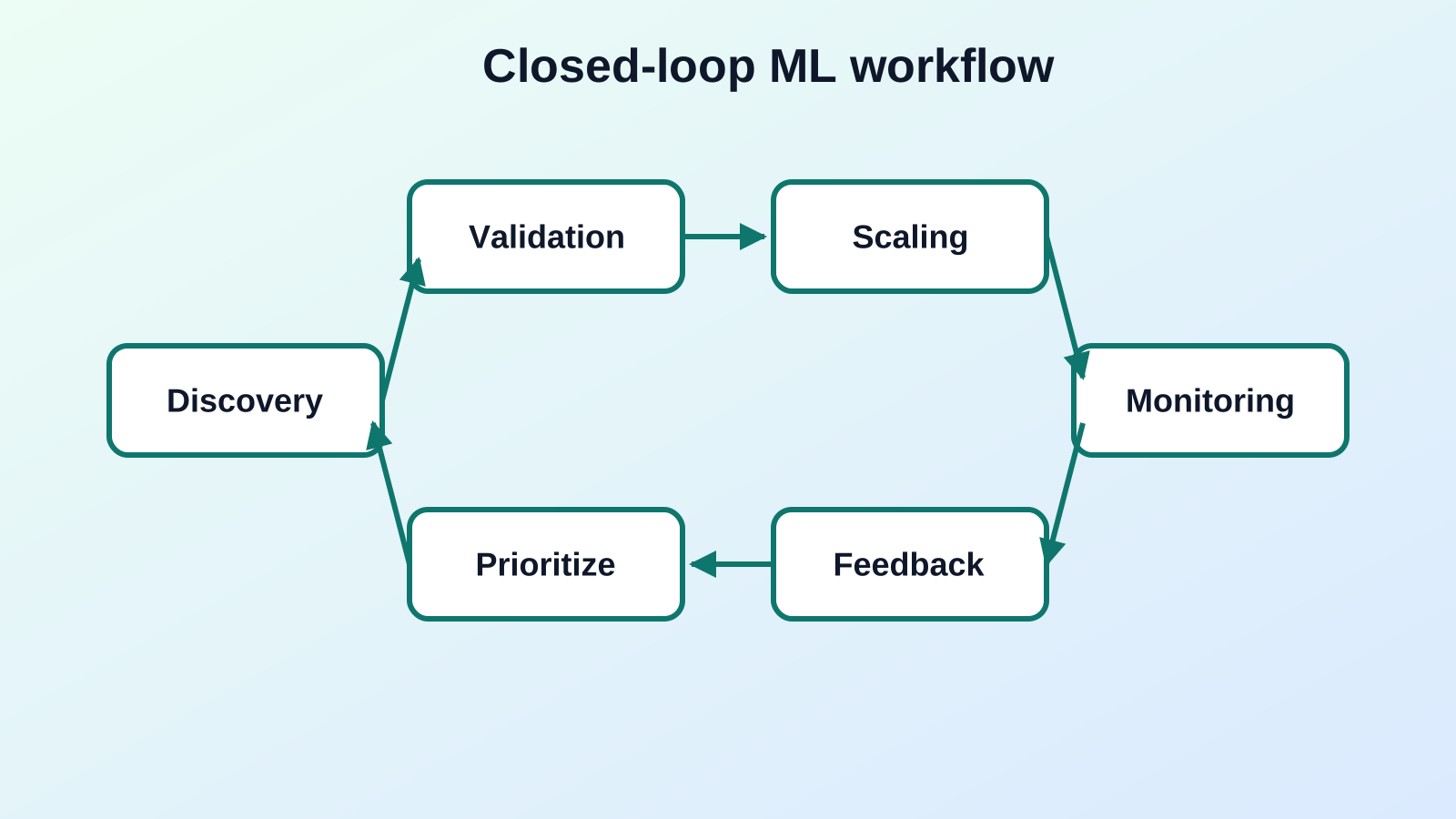
A practical way to deploy this is as a staged loop: start with unsupervised signals to surface unknown patterns, prioritize the most relevant findings with domain experts, and then convert validated patterns into supervised labels for scaling. This cycle builds trust and measurable value over time.
Explore how Predsense approaches this on https://www.predsense.ai/